
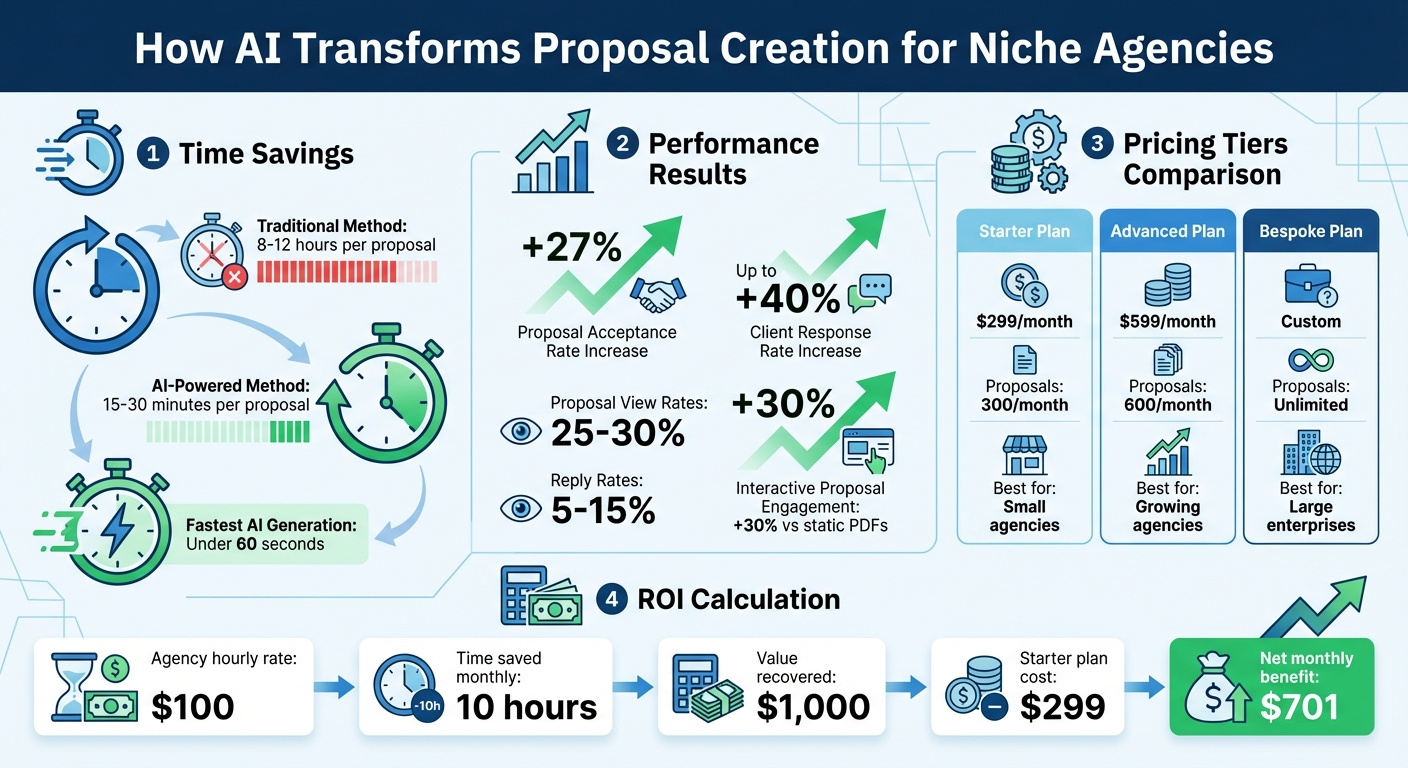
AI-powered tools are transforming how agencies create proposals for niche markets like design, marketing, and software development. Instead of spending 8–12 hours manually drafting Upwork proposals, agencies can now generate polished, customized documents in as little as 15–30 minutes – or even under 60 seconds in some cases. These tools analyze client needs, match them to relevant portfolio projects, and refine the tone and content for specific audiences. The result? A 27% boost in proposal acceptance rates and up to 40% higher client response rates.
Key Takeaways:
- Speed: AI reduces proposal creation time dramatically.
- Personalization: Tools use client data and market trends to craft highly relevant proposals.
- Results: Agencies see better engagement, higher acceptance rates, and saved time.
Platforms like Convertix.io specialize in automating this process for Upwork agencies, offering features like portfolio-based matching, job filtering, and performance tracking. With pricing starting at $299/month, these tools help agencies scale without sacrificing quality.
AI Proposal Generation Impact: Time Savings and Performance Metrics for Agencies
How AI Analyzes Niche Client Needs
Using Client and Market Data
When crafting tailored proposals, AI starts by breaking down client job postings to uncover essential details like pain points, technical requirements, budgets, and timelines. For instance, a software development client might stress the need for expertise in a specific framework, while a marketing client could focus on ROI tracking as a top priority.
AI doesn’t stop at job postings. By combining this information with client history and market trends, it creates a detailed profile to guide proposals. If a client has worked with agencies before, AI digs into past projects to understand their preferred communication style, the scope of previous work, and the type of deliverables they value most. This method ensures proposals directly address the client’s specific needs instead of relying on generic pitches. This level of AI personalization boosts ROI by increasing the relevance of every bid.
With this foundation, the next step involves connecting client needs to proven successes in the agency’s portfolio.
Portfolio-Centric Matching
Once the client profile is established, AI taps into the agency’s portfolio to find the best fit. It goes beyond merely identifying similar projects; it highlights success metrics that resonate with the client’s industry. For example, when pitching to a high-end design client, AI might present past work that achieved visually stunning results under tight deadlines, complete with client testimonials and measurable achievements. This approach ensures the proposal demonstrates a clear understanding of the client’s goals and expectations.
sbb-itb-5c5517e
How I Create Client Proposals in Minutes, Not Hours AI Workflow Revealed
How AI Customizes Proposal Content
AI takes client needs analysis a step further by refining proposal content to connect with specific audiences on a deeper level.
Dynamic Personalization Techniques
When comparing AI vs manual proposal writing, AI transforms generic templates into highly tailored documents by pulling key details – like company names, goals, or pain points – straight from job postings using natural language processing (NLP) tools. For instance, instead of a vague statement about lead generation, AI might craft something like, “tailored solutions for your cosmetic surgery lead generation challenges”, using the exact language from the client’s posting.
It doesn’t stop there. AI taps into market data to address industry-specific hurdles. For example, when pitching to enterprise software clients, it might highlight “competitor gaps in enterprise software sales” using insights from market research.
Using the right terminology is equally important. AI tools, trained on sector-specific content, ensure proposals sound credible. Whether it’s phrases like “RFP compliance for government contractors” or “portfolio-centric matching for Upwork agencies”, the language is spot on for the audience.
Adjusting Tone and Ensuring Compliance
AI fine-tunes the tone of proposals to align with client expectations. For regulated industries, such as government contracting, it adopts a formal and compliance-heavy tone. Meanwhile, for creative agencies, it leans toward a more conversational style. Sentiment analysis tools play a key role here, scanning job postings and past communication to determine the right level of formality.
On top of that, AI ensures proposals meet specific marketplace requirements. For example, it checks for Upwork’s proposal length limits and formatting rules, while also flagging issues like missing security questionnaires. This attention to detail helps proposals comply with platform standards and client expectations.
Convertix.io: AI-Powered Proposal Generation for Niche Markets
Portfolio-Based Proposal Automation
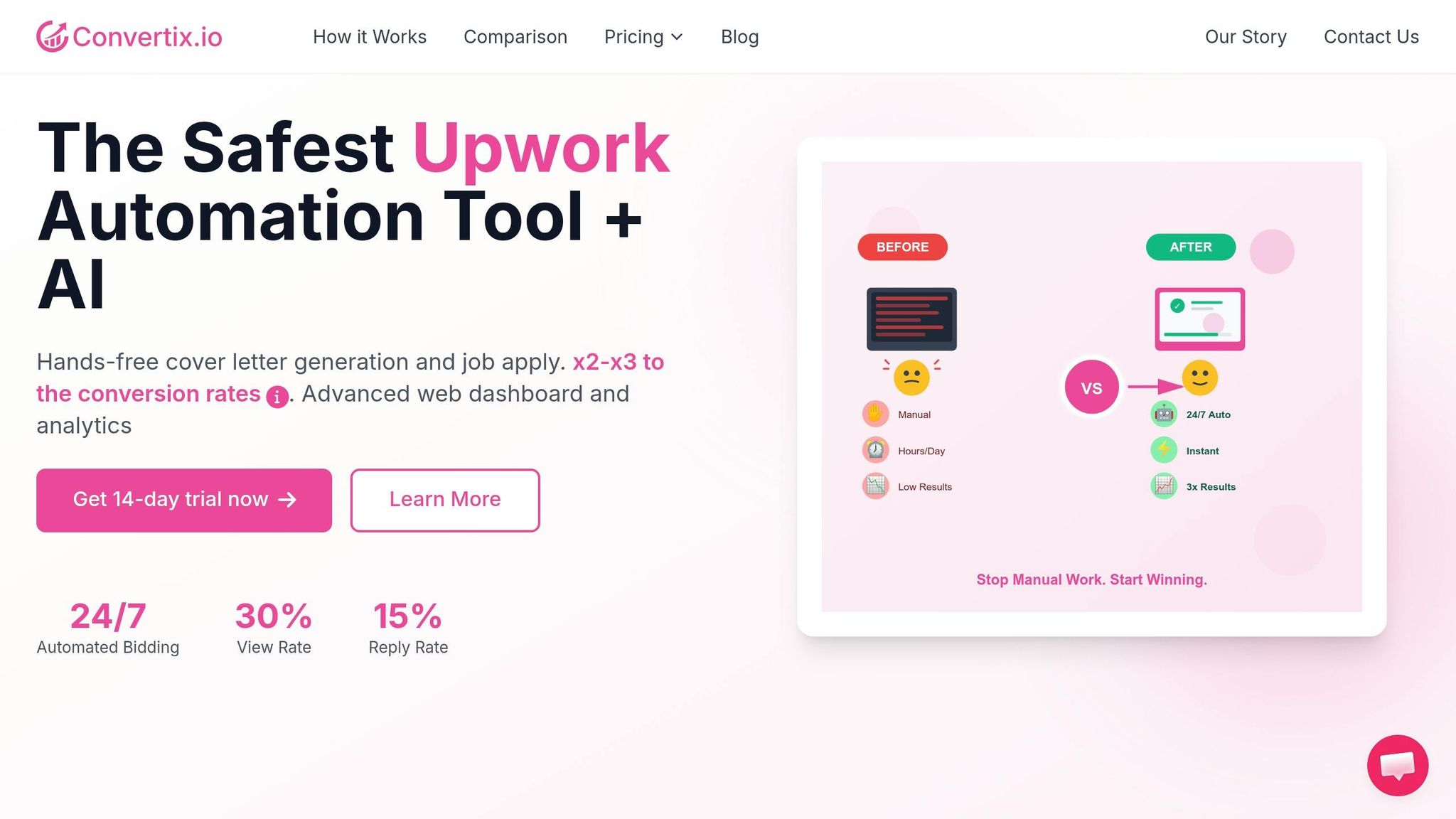
Convertix.io uses AI to simplify the process of creating tailored proposals, especially for agencies targeting niche markets on platforms like Upwork. What makes it stand out is its portfolio-driven approach. The platform scans your agency’s portfolio and selects the most relevant past projects to include in each cover letter. It highlights key details such as the project title, URL, and tech stack, ensuring each proposal feels personalized and relevant. You can even define custom AI prompts to refine how the system identifies the right opportunities – like prioritizing React and Node.js projects while steering clear of PHP roles.
Working around the clock, Convertix.io typically submits proposals within 10 minutes of a job posting. This quick turnaround helps achieve proposal view rates of 25–30% and reply rates ranging from 5–15%. Let’s dive into the features that make this tool especially valuable for niche-focused agencies.
Key Features for Niche Success
Convertix.io doesn’t just stop at portfolio-based proposals – it offers a suite of features tailored for agencies working in specific niches, making it one of the best Upwork tools for small agencies. Its automated job-matching system uses advanced filters and AI audits to ensure job postings align with your agency’s expertise. This smart filtering can save about 30% of Upwork connects by avoiding irrelevant job applications.
Customization is another strong point. Agencies can tweak cover letter prompts to reflect their unique tone, emphasize ROI, or showcase technical skills tailored to their niche. Plus, the platform includes a web dashboard for tracking performance metrics like view rates, reply rates, and hire rates. These insights help agencies refine their approach and improve results over time.
For those ready to try it, Convertix.io offers a Starter plan at $299 per month, covering 300 proposals, along with a 14-day free trial. It’s a practical option for agencies aiming to thrive in specialized markets.
Measuring the Success of AI-Tailored Proposals
Tracking Proposal Performance
To assess how well AI-tailored proposals are working, keep an eye on metrics like proposal acceptance rates, response times, and overall win rates. Monitoring these metrics is the first step to increasing your Upwork reply rate. The standout metric here is the proposal acceptance rate – the percentage of proposals that lead to signed agreements. Research indicates that proposals optimized with AI can achieve a 27% higher acceptance rate compared to traditional methods.
Interactive proposals also perform better, generating 30% more engagement than static PDFs. Tools like Convertix.io’s dashboard make it easier to monitor these key metrics, helping you spot areas for improvement. By analyzing engagement trends, you can fine-tune your AI-driven prompts and templates. For agencies sending multiple proposals each week, this approach can save 5 to 10 hours weekly – time that would otherwise be spent on manual drafting.
These insights can help you choose a pricing plan that fits your agency’s needs and scale.
Scaling with AI: Pricing Plans Overview
Once metrics show the value of AI-driven proposals, the next step is selecting a plan that aligns with your agency’s growth. Convertix.io provides three pricing tiers tailored to different stages of growth and proposal volumes.
- The Starter plan costs $299/month and supports 300 proposals per month. It includes advanced portfolio matching and priority support, making it a great choice for smaller agencies starting to scale their agency on Upwork.
- The Advanced plan is priced at $599/month, allowing up to 600 proposals per month. This plan offers custom portfolio optimization and 24/7 dedicated support, ideal for agencies handling higher volumes.
- For larger agencies, the Bespoke plan offers unlimited proposals, custom features, and a dedicated account manager. Pricing for this plan is available upon request.
| Plan | Price (USD/month) | Proposals/Month | Key Features | Best For |
|---|---|---|---|---|
| Starter | $299 | 300 | Advanced portfolio matching, priority support | Small agencies scaling their Upwork presence |
| Advanced | $599 | 600 | Custom portfolio optimization, 24/7 dedicated support | Growing agencies with higher proposal volume |
| Bespoke | Contact Us | Unlimited | Custom features, dedicated account manager | Large agencies needing enterprise solutions |
When evaluating cost-effectiveness, think about your labor costs and time saved. For instance, an agency saving 10 hours per month – at an hourly rate of $100 – recoups $1,000 in value, making the Starter plan a worthwhile investment.
Key Takeaways
AI is shaking up how niche market proposals are crafted by digging into client data and matching portfolio strengths with specific project needs. With dynamic personalization, it adjusts tone and content to fit each client’s unique requirements while staying within platform rules. Automating this process doesn’t just save time – it allows agencies to focus on strategic tasks and boost their chances of success.
Take Convertix.io, for example. This platform simplifies the proposal process for Upwork agencies with up to 50 employees. It automates job matching, generates proposals based on portfolios, and tracks performance metrics. By doing so, agencies can scale their operations without compromising on quality. Plus, the efficiency gains and higher conversion rates help agencies recover their investment quickly.
To make the most of these AI tools, agencies should keep an eye on key metrics like proposal acceptance rates, response times, and win rates. These insights help fine-tune AI prompts and templates, ensuring better results over time. For niche markets that require detailed customization, AI processes data faster and more precisely than manual methods ever could.
Whether you’re a small agency aiming to grow or a larger one managing hundreds of proposals each month, AI’s ability to meet niche client demands offers a clear route to steady growth on Upwork.
FAQs
What data does AI use to tailor a proposal for a niche client?
AI fine-tunes proposals by examining critical details like client communication preferences, job descriptions, portfolio samples, previous project results, and client feedback. This approach helps create proposals that are tailored to meet the unique requirements of specific clients, ensuring they resonate with their exact needs.
How does portfolio matching make proposals more convincing?
Portfolio matching enhances proposals by presenting past projects that align with the client’s specific challenges. By showcasing measurable outcomes, customized examples, and demonstrated expertise, this method makes proposals more relatable and credible.
Which metrics should I track to prove AI proposals are working?
To gauge how well AI-generated proposals are working, focus on tracking these key metrics:
- Proposal View Rate (PVR): Measures how often recipients open and view your proposals.
- Lead Reply Rate (LRR): Tracks how frequently leads respond to your proposals.
- Interview Rate: Indicates the percentage of proposals that lead to interview opportunities.
- Proposal Acceptance Rate: Shows how many proposals are ultimately accepted.
These metrics give you a clear picture of engagement, responsiveness, and overall success in converting leads. They also provide valuable insights to fine-tune your approach for better results.
