
Many agencies fail to win projects on Upwork because their proposals lack personalization, fail to address client-specific needs, and rely too heavily on generic templates. These mistakes lead to low response rates, fewer projects, and reduced visibility within Upwork‘s algorithm. To succeed, agencies must:
- Avoid generic pitches and impersonal greetings.
- Address client pain points directly, using their language.
- Showcase relevant portfolio examples tied to the client’s goals.
- Structure proposals clearly, with actionable steps and timelines.
Agencies that write winning proposals and leverage tools like AI to boost ROI through personalization can improve their chances of winning projects and building momentum on the platform.
Upwork proposal sample: 11 tips from a $500k freelancer

Common Upwork Proposal Mistakes
Repeating the same mistakes in proposals often signals a lack of attention to detail and a cookie-cutter approach, which can hurt an agency’s chances of success.
Generic Proposals That Don’t Connect
One of the most common missteps is sending out generic proposals that fail to resonate with the client. Starting with impersonal greetings like "Dear Sir/Madam" or "I hope this message finds you well" does little to establish a connection or show genuine interest in the project.
For example, imagine a client posts a job seeking help to redesign their e-commerce website. They’re likely expecting a proposal that demonstrates an understanding of their industry, challenges, or specific needs. Instead, receiving a generic pitch such as, "We are a full-service agency with 5+ years of experience. We can handle all your needs", can leave the impression that no real effort was made to address their unique goals.
Using incorrect terminology or referencing unrelated services can make things worse. For instance, if a client is looking for mobile app development, a proposal that talks about SEO strategies or social media management can make it clear that the proposal wasn’t tailored to their project.
Next, let’s look at how failing to address a client’s specific pain points can further weaken a proposal.
Missing Client Problems and Needs
Another major pitfall is ignoring the specific challenges outlined in the job description. Instead of addressing these pain points, some proposals focus too much on the agency’s history or credentials.
For instance, if a client mentions, "Our current website loads slowly and customers abandon their shopping carts", the proposal should include actionable insights, like strategies to improve page speed or boost conversion rates. A proposal that instead emphasizes design aesthetics or brand identity – without directly tackling the client’s concerns – risks creating a mismatch in expectations.
This issue becomes even more pronounced when agencies rely heavily on templates. For example, a SaaS company looking to improve user onboarding would expect proposals discussing user experience principles or performance metrics. A generic response that skips over these specifics will likely fall flat.
Template Overuse and Weak Portfolio Examples
Relying too much on templates and showcasing irrelevant portfolio examples only adds to the problem. Many agencies use pre-written templates that are outdated or poorly customized. This can lead to embarrassing mistakes, like addressing the wrong client or referencing the wrong type of project.
Irrelevant portfolio examples can also dilute a proposal’s effectiveness. For instance, if a client is developing a fintech app, showing work related to restaurant websites or fashion blogs won’t make a strong impression. Even when relevant examples are included, failing to connect past results to the client’s current challenges can leave the proposal feeling incomplete.
Lastly, using a one-size-fits-all pricing structure – such as a flat fee that doesn’t account for the project’s complexity – can further signal a lack of effort. Clients often want to see pricing that reflects their specific requirements, and a generic approach may raise doubts about the agency’s ability to deliver a tailored solution.
How Bad Proposals Damage Agency Performance
The mistakes made in crafting poor proposals don’t just hurt your chances of landing individual projects – they can have a ripple effect, undermining your ability to scale your agency on Upwork. A drop in client responses can directly impact how the platform’s algorithms and client selection processes treat your agency.
Low Client Response and Conversion Rates
When agencies rely on generic or poorly written proposals, they often see fewer responses from clients. Think about it – clients are flooded with proposals for every project, and those that fail to stand out are quickly dismissed. Proposals heavy on templates or lacking personalization make a weak impression, leaving clients skeptical about an agency’s ability to deliver customized, high-quality work.
This lower response rate creates a vicious cycle. Agencies end up sending out far more proposals just to secure the same number of projects, wasting valuable time and resources. Instead of focusing on fostering meaningful client relationships, they’re stuck in a numbers game. Worse yet, these low engagement metrics can harm an agency’s visibility on Upwork.
Upwork Algorithm and Client Selection Patterns
Upwork’s systems, combined with how clients select agencies, tend to penalize those submitting weak proposals. The platform tracks metrics like client responses and hiring outcomes. Agencies with poor engagement often experience reduced visibility in search results. While Upwork hasn’t made all the details of its algorithm public, agencies with stronger engagement are rewarded with higher rankings and more invitations to premium projects.
Clients also tend to favor agencies that demonstrate a clear understanding of their project needs. They typically narrow their shortlist to a handful of proposals – usually the ones that address specific requirements and showcase relevant experience. Fewer wins mean fewer positive reviews, which can hurt an agency’s profile competitiveness over time.
Generic vs. Targeted Proposal Results
The difference between generic and tailored proposals is stark. Personalized proposals are far more likely to grab a client’s attention, leading to better response rates and a higher chance of being shortlisted. Agencies that take the time to craft targeted proposals not only win more projects but also attract clients who value quality and are willing to pay for it. This creates a positive feedback loop: better reviews, more referrals, and a higher likelihood of repeat business.
sbb-itb-5c5517e
Practical Ways to Write Better Proposals
Building on the common mistakes we’ve explored, these strategies can help you turn generic pitches into engaging, tailored proposals that resonate with clients.
How to Personalize Each Proposal
Start by diving into the client’s project description. Pay attention to the language they use and reflect it back in your proposal. For instance, if a client mentions "increasing user engagement", don’t rephrase it – use their exact words. This small detail shows you’re paying attention.
Make your opening lines specific to the client’s goals. Instead of a generic phrase like, "I’m excited about this project", try something like, "Your focus on reducing customer acquisition costs aligns perfectly with strategies we’ve successfully implemented for other B2B companies." This immediately signals that you understand their unique needs.
Address practical concerns like timeline and budget upfront. If the client has mentioned a tight deadline – say, 30 days – acknowledge it directly and explain how your process fits within that timeframe. This not only shows you’re listening but also positions your proposal as realistic and actionable.
Lastly, adapt your tone to match the client’s communication style. A formal corporate client might expect polished, professional language, while a startup founder might prefer a conversational, straightforward approach. Tailoring your tone demonstrates that you’ve considered how they prefer to communicate, making your proposal feel even more relevant.
Using Your Portfolio to Strengthen Proposals
Your portfolio isn’t just a collection of past work – it’s a powerful tool to build trust and confidence. In fact, professionals with a portfolio are hired nine times more often than those without one. But having a portfolio isn’t enough; the way you present it matters just as much.
Choose portfolio pieces that align with the client’s specific needs. If the project involves redesigning a mobile app, showcase examples of mobile design rather than unrelated work. Highlighting relevant experience helps clients immediately see how your skills apply to their project.
Use the STAR method (Situation, Task, Action, Result) to connect your portfolio to the client’s challenges. For example:
"A SaaS company was struggling with user retention during onboarding (Situation). My role was to revamp their user flow (Task). After conducting extensive user testing, I simplified the process by removing unnecessary steps (Action). The result was a measurable increase in user retention and conversion rates (Result)."
Consider creating private portfolio items tailored to a specific client. These can include examples or case studies that you might not display publicly but are highly relevant to the client’s project.
Attach work samples, case studies, or even client testimonials that highlight similar successes. This approach not only reinforces your expertise but also builds credibility, setting the stage for a well-structured proposal.
Proposal Structure for Maximum Impact
Start your proposal with a concise summary of the client’s challenge and your tailored solution. Skip generic pleasantries and dive straight into what matters most to the client.
Organize your approach into clear, easy-to-follow sections. Break down your process into specific phases or deliverables. For example, instead of saying, "I’ll improve your website", outline steps such as "Phase 1: User research", "Phase 2: Wireframe development", and so on. Clear milestones give clients a better sense of what to expect.
Include a realistic timeline with defined milestones. Clients appreciate knowing when they’ll see progress and what each stage entails. Being transparent about deadlines builds trust and shows that you’ve thought through the project’s logistics.
Wrap up with a clear next step and communication plan. Outline how you’ll keep the client updated throughout the project and specify any information or materials you’ll need from them to get started. This demonstrates your organizational skills and reassures them that you’re ready to hit the ground running.
Keep your proposals concise but thorough. A well-crafted proposal typically falls between 200–400 words, striking the perfect balance between providing enough detail and respecting the client’s time. This approach ensures your proposals are engaging, professional, and effective.
Using AI Tools for Better Proposal Results
Writing proposals manually can be a major bottleneck for growing agencies. AI-powered tools take the hassle out of this process by automating repetitive tasks while still keeping proposals personal and tailored to each client.
Why AI-Powered Proposal Tools Work
AI tools bring speed and consistency to the table, helping agencies craft personalized responses in no time. These tools analyze job descriptions, client histories, and portfolio examples to create targeted proposals. They also learn from past successes, improving language choices and structure over time. This data-driven approach means agencies can refine their proposals and outreach strategies continually, ensuring they meet the competitive standards needed to win more projects.
Manual vs. AI Proposal Writing Comparison
Convertix.io takes these AI advantages to the next level by using customized data analysis to make your proposals even more effective.
How Convertix.io Helps Agencies Win More Projects
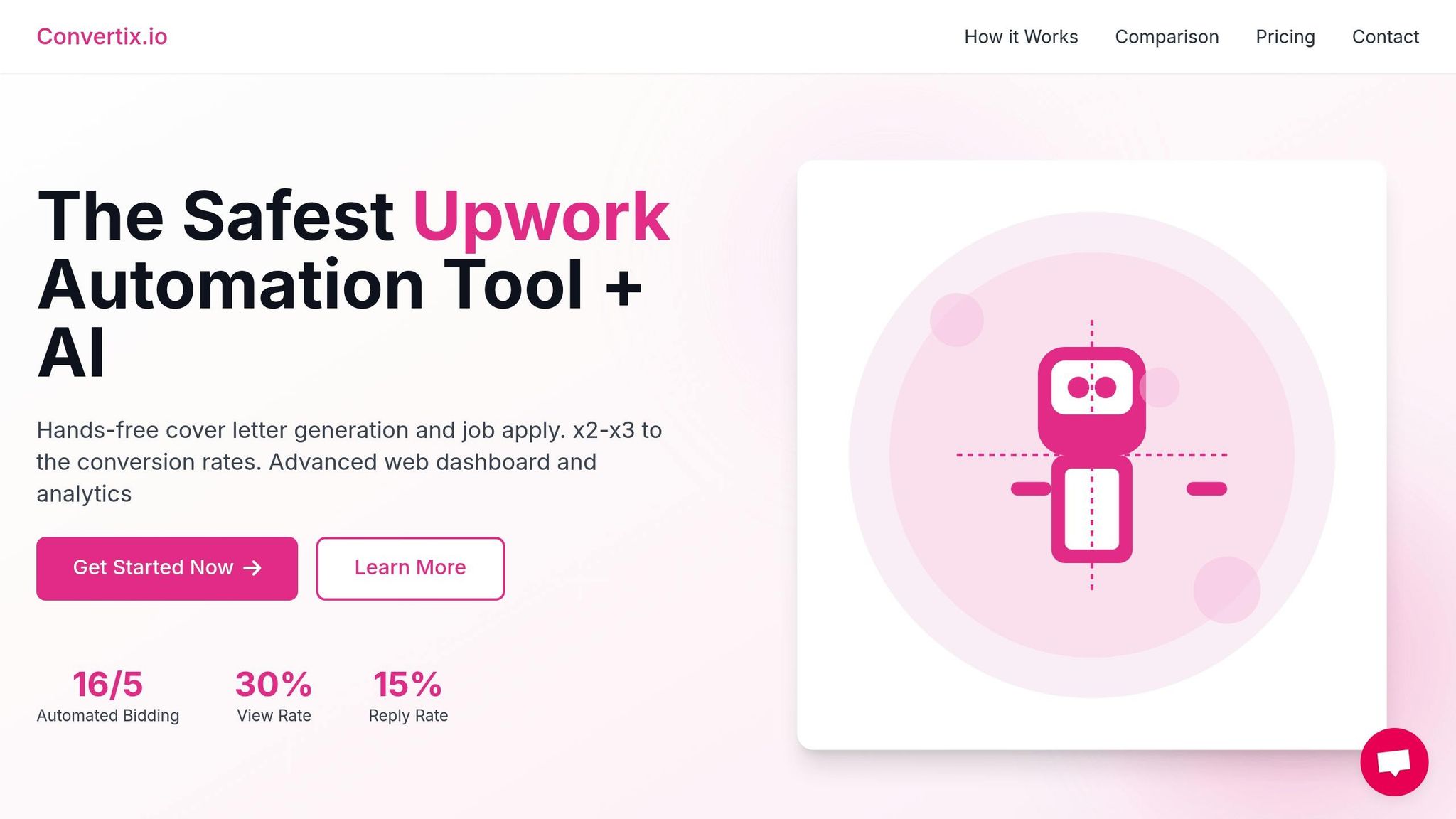
Convertix.io is designed to help agencies overcome the common challenges of proposal writing on platforms like Upwork. By focusing on your portfolio, it analyzes your work samples and matches them with job opportunities that align with your strengths. This ensures your proposals aren’t generic but instead highlight the most relevant examples of your expertise, making each pitch feel authentic and aligned with your agency’s voice.
The platform’s advanced matching algorithm doesn’t stop at simple keyword searches. It evaluates multiple factors to pinpoint opportunities where your agency has the best chance of success.
Convertix.io offers flexible pricing plans to suit different needs:
- Starter Plan: 300 proposals per month for $299
- Advanced Plan: 600 proposals per month for $599
- Bespoke Tier: Unlimited proposals with custom features
Additionally, performance tracking tools provide actionable insights, helping you fine-tune your strategy over time. With Convertix.io operating around the clock, your agency can seize opportunities anytime, keeping you ahead of the competition on Upwork.
Conclusion: Fixing Proposals to Win More Upwork Projects
Thriving on Upwork comes down to addressing key mistakes like relying on generic pitches, overusing templates, and overlooking what clients truly need. These missteps don’t just hurt the performance of individual proposals – they can also tarnish your agency’s visibility and reputation in Upwork’s highly competitive environment.
When proposals fall flat, the results are clear: fewer responses, lower conversion rates, and reduced visibility within Upwork’s algorithm. If clients repeatedly pass on your pitches, the platform’s system takes note, making it even tougher to connect with potential clients down the line.
Agencies that focus on tailoring each proposal to the client’s specific needs see significantly better results. They’re more likely to make it onto shortlists, secure more projects, and foster strong client relationships that often lead to repeat work and valuable referrals.
The key lies in combining strategic personalization with the right tools. AI-powered platforms like Convertix.io help agencies balance quality with efficiency, enabling them to craft personalized proposals without sacrificing the ability to respond to more opportunities. This approach saves time while ensuring that each pitch resonates with the client.
Shifting from one-size-fits-all templates to well-researched, customized proposals can unlock steady growth on Upwork. Agencies that consistently win treat each proposal as a tailored solution to the client’s specific problem, backing it up with relevant portfolio examples and clear, concise communication.
FAQs
What’s the best way for agencies to personalize their Upwork proposals and grab a client’s attention?
To make your Upwork proposals stand out, begin by addressing the client by their name and mentioning specific details from their job post. This small but meaningful step shows you’ve taken the time to understand their needs. Focus on showcasing your skills and experience that directly match the project requirements. Skip the generic phrases – craft a pitch that highlights how you can tackle their specific challenges.
Maintain a tone that’s both professional and conversational, and let your genuine enthusiasm for the project shine through. A well-thought-out, tailored proposal not only grabs attention but also builds trust, boosting your chances of landing the job.
How do generic templates affect an agency’s success and visibility on Upwork?
Using generic templates on Upwork can seriously impact an agency’s success and visibility. These cookie-cutter proposals often lack personalization, failing to address the unique needs of each client. In a competitive marketplace, this makes it much harder to stand out or catch a client’s attention. The result? Fewer views and even fewer opportunities to secure projects.
Upwork’s algorithm also favors tailored proposals that include relevant keywords and complete profiles. Submitting generic applications can hurt your ranking on the platform, making it even tougher to get noticed. Over time, this approach can hold you back from attracting high-value clients and building a strong reputation. To increase your chances of success, focus on crafting customized proposals that speak directly to the client’s needs and showcase your expertise.
How can Convertix.io help agencies write better proposals on Upwork?
Convertix.io simplifies the proposal writing process for agencies by using AI to create customized and polished proposals in no time. It examines job postings and client preferences to craft pitches that directly address their needs, giving agencies an edge over the competition.
By automating the tedious work of adjusting tone and content, Convertix.io allows agencies to respond quickly – sometimes within the crucial first 15 minutes of a job posting, when clients are most engaged. This not only saves valuable time but also boosts the likelihood of landing more client opportunities on Upwork.
