
AI proposal tools are transforming how agencies approach freelancing on Upwork. These tools save time, improve response rates, and help users identify the best opportunities. However, Upwork has strict policies to ensure quality, prevent spam, and protect client data. Striking the right balance between automation and compliance is essential for success.
Key Points:
- AI Benefits: Tools like Convertix.io reduce proposal creation time by up to 80% and increase response rates by 3x.
- Upwork Policies: Upwork requires personalized, high-quality proposals and prohibits excessive automation or improper data use.
- Compliance Tips: Use AI for research and drafts but refine proposals manually. Avoid sharing sensitive client data with AI systems.
- Performance Tracking: AI tools offer insights into proposal success rates, client feedback, and market trends to refine strategies.
Takeaway: AI tools can boost efficiency, but agencies must combine automation with human input to meet Upwork’s standards and maintain client trust.
Why AI-Generated Proposals Are Failing on Upwork
Core Features of AI Proposal Tools
AI proposal tools have reshaped how agencies operate on Upwork, offering more than just basic automation. By blending intelligent job matching with detailed performance analytics, these tools empower agencies to work smarter and achieve greater efficiency.
Automated Job Matching and Tailored Proposals
One standout feature of these tools is their ability to match agencies with the right opportunities and craft personalized proposals. Instead of generic templates, modern AI systems analyze job postings alongside an agency’s portfolio, ensuring proposals emphasize relevant projects and client feedback.
Take Convertix.io, for instance. This platform uses a portfolio-driven approach, reviewing an agency’s past work to create proposals that directly address client requirements. By analyzing client messages and job details, these tools fine-tune the tone and structure of proposals, making them more appealing and aligned with client expectations.
Real-time notifications further enhance this process, allowing agencies to respond quickly to promising opportunities and improve their chances of landing projects.
Performance Tracking and Strategy Customization
Performance tracking is another critical feature that helps agencies grow their success on Upwork. AI tools transform proposal data into actionable insights. For example, in 2025, LogicBalls launched its “Upwork Success Tracker”, an AI-driven feature that analyzes previous job wins, proposal performance, and client interactions. This tool provides agencies with recommendations to boost their win rates. Similarly, the “Upwork Growth Agent” introduced a Weekly Strategy Report, offering insights into trending niches, popular keywords, and rate benchmarks – helping agencies adjust their strategies before market trends shift.
Upwork itself has embraced performance analytics. In Summer 2025, it added “proposal insights” and “bid insights” to its Freelancer Plus and Agency Plus subscriptions. These features provide users with a clearer understanding of bidding trends, top opportunities, and suggested bid strategies, enabling smarter and more efficient proposals.
Advanced AI tools also support A/B testing proposals, allowing agencies to experiment with different styles, tones, and positioning strategies. This helps refine approaches based on what resonates most with clients. Additionally, customization options let agencies tailor their workflow by setting parameters like project budgets, client ratings, competition levels, and even time zones. These preferences ensure opportunities align with an agency’s capacity and strategic goals.
Together, these capabilities allow agencies to harness AI’s efficiency while adhering to Upwork’s strict policy guidelines.
Upwork’s Policy Requirements
Upwork has established clear policies to maintain the quality of its platform. These guidelines impact how agencies can use AI tools while ensuring proposals remain personal and tailored. Here’s a breakdown of the key rules agencies need to follow.
Automation Limits and Spam Prevention
Upwork discourages the use of generic, automated proposals. To maintain quality, the platform may limit the number of proposals an account can submit. Automated systems are in place to detect repetitive or non-personalized submissions. Agencies relying heavily on automation without proper oversight risk receiving warnings. To avoid this, combine AI-generated suggestions with human input to craft winning Upwork proposals that genuinely address each client’s needs.
Data Privacy and AI Usage Rules
In addition to curbing automation, Upwork enforces strict data privacy and security standards. Agencies must handle client information responsibly when using AI tools. Never share confidential client details without explicit consent. Also, avoid inputting sensitive client data into AI systems that may store or learn from it, as this could compromise intellectual property and confidentiality.
Upwork also prioritizes account security. Avoid using tools that require your Upwork login credentials or rely on unofficial integrations, as these violate platform security policies. While AI tools aren’t off-limits, Upwork expects all proposals to reflect genuine engagement with client requirements, with agencies maintaining full control over the proposal process.
sbb-itb-5c5517e
Where AI Tools and Upwork Policies Conflict
While AI tools bring undeniable advantages, they can sometimes clash with Upwork’s established policies. Recognizing these areas of friction is essential for agencies looking to benefit from automation without running afoul of the platform’s rules. Below, we dive into the main risk areas and offer insights into addressing these challenges.
Main Risk Areas for Agencies
One major issue lies in balancing automation with authenticity. AI-generated proposals often look polished on the surface but can lack the depth and understanding that clients expect. Many of these proposals merely rephrase job descriptions, making them feel impersonal or even spam-like to clients. This lack of genuine insight can lead to lower response rates and even warnings from Upwork’s detection systems, which are designed to flag overly generic submissions.
Another critical concern is how data is handled. Many AI tools require users to input sensitive client or project details to generate tailored proposals. Sharing this information without explicit consent could breach Upwork’s data privacy rules. Agencies must ensure that any AI platform they use has strong data protection measures that align with Upwork’s policies.
Over-reliance on automation is another red flag. Repetitive, non-personalized proposals can trigger Upwork’s detection systems, potentially harming an agency’s reputation and standing on the platform.
Finding the Right Balance
To navigate these risks, agencies should use AI tools as a complement to human effort, not a replacement. AI can help with initial research, structuring ideas, and generating drafts, but human creativity and insight are essential for crafting personalized, impactful proposals that resonate with clients.
Transparency is another key element. Upwork encourages openness about using AI in projects, and being upfront about AI’s role can foster trust with clients. Clear disclosure practices not only align with Upwork’s guidelines but also demonstrate professionalism.
Quality control is equally important. Agencies should implement rigorous review processes to ensure that AI-assisted content meets high standards. Regular audits can help verify that automation enhances, rather than detracts from, the quality of proposals.
Platforms like Convertix.io offer a practical solution by integrating compliance measures directly into their systems. By combining the efficiency of AI with human oversight, Convertix.io enables agencies to scale their proposal efforts while maintaining the personalization and quality that Upwork demands. This balanced approach safeguards client trust and ensures alignment with Upwork’s strict guidelines.
How to Use AI Tools While Following Upwork Policies
Using AI on Upwork can save time and boost productivity, but it’s essential to combine automation with human oversight to stay efficient and compliant with platform rules.
Creating Quality, Personalized Proposals
The key to using AI effectively – and within Upwork’s guidelines – is personalization. Avoid relying on generic AI-generated content. Instead, use AI as a tool to gather insights about opportunities and tailor proposals to specific clients.
Start by feeding your AI tools detailed portfolio insights about your agency’s skills, past achievements, and similar projects you’ve successfully completed. Let AI generate a draft, but treat it as a starting point, not the final product.
Each proposal should directly address the client’s unique needs. For example, if a client wants to improve e-commerce conversion rates, highlight your experience in achieving similar results. Share specific strategies you’ve used and measurable outcomes you’ve delivered. Avoid cookie-cutter language that could appear in multiple proposals. Instead, vary your tone to match the client’s communication style, adjust your focus based on the project, and make each opening line fresh and engaging.
Finally, always review and refine AI-generated drafts to ensure they align with Upwork’s standards and showcase your authentic expertise.
Why Human Review Is Necessary
Human oversight is essential to ensure AI-generated content meets professional expectations and Upwork’s policies. While AI can process and organize information quickly, it often misses subtle details or industry-specific nuances that can make or break a proposal.
By reviewing AI drafts, you can catch inconsistencies, awkward phrasing, or inaccuracies that might slip through automated processes. This step is also critical for maintaining an appropriate tone and style that aligns with client expectations and avoids sounding robotic or overly generic.
Another major benefit of human review is avoiding patterns that could trigger Upwork’s spam detection systems. Repetitive or formulaic content can hurt your chances of standing out. A thoughtful review process ensures your proposals feel genuine, professional, and tailored to each client’s needs – helping you succeed in competitive bidding scenarios.
This balance of AI speed and human refinement is what sets successful agencies apart.
How Convertix.io Maintains Policy Compliance
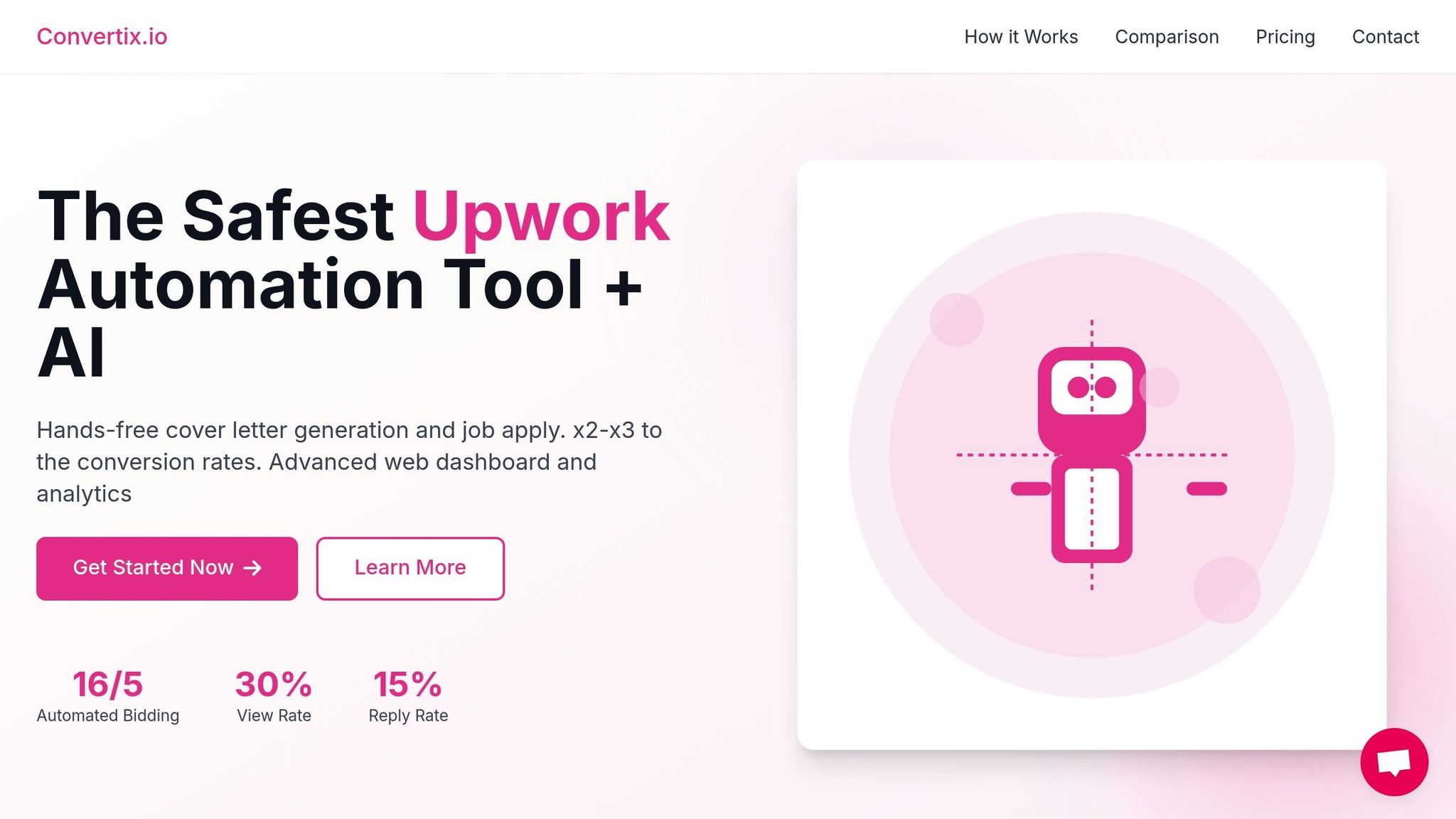
Convertix.io takes compliance and personalization seriously by combining advanced tools with thoughtful oversight. The platform’s portfolio-driven approach ensures every proposal is grounded in your agency’s real expertise and past successes, reducing the risk of creating content that feels generic or misleading.
Convertix.io also includes performance tracking features, which allow agencies to monitor how proposals are received. If response rates drop or client feedback points to areas for improvement, you can adjust your strategy in real-time to stay aligned with Upwork’s guidelines.
The platform offers flexible pricing plans to meet different needs, starting at $299 for 300 proposals and scaling to a Bespoke tier with unlimited proposals. These options reflect Convertix.io’s focus on delivering quality while maintaining compliance with Upwork’s standards.
Key Takeaways
AI proposal tools shine when automation and compliance come together seamlessly. The best results emerge when AI’s efficiency is paired with human oversight, creating proposals that not only stand out but also adhere to platform rules.
Smart automation enhances efficiency without compromising quality. Platforms like Convertix.io showcase this balance by blending automation with strict adherence to policies. Tools that focus on portfolio-driven approaches can use an Upwork proposal generator to craft tailored proposals that feel genuine rather than cookie-cutter, offering agencies clear value through compliant automation.
Personalization is key to avoiding spam filters and connecting with clients. Generic proposals often fail to engage and can even trigger spam detection. Successful agencies use AI as a starting point, then refine each proposal with specific project details, relevant experience, and client-centric language. This method retains the speed of automation while ensuring every proposal feels professional and authentic.
Human oversight plays a critical role in catching errors, fine-tuning tone, and ensuring accuracy. This step not only safeguards agencies from policy violations but also enhances the quality of proposals and boosts response rates. This blend of AI and human input supports compliance and fosters continuous improvement.
Tracking performance is essential for growth. By monitoring metrics like proposal success rates, client feedback, and response trends, agencies can fine-tune their strategies over time. AI tools with built-in analytics make it easier to identify what works, helping agencies stay compliant while achieving better results.
The most successful agencies use AI to enhance productivity without losing the personal touch. By combining automation with thoughtful customization and maintaining human oversight, agencies can scale their efforts, strengthen client relationships, and stay aligned with Upwork’s guidelines.
FAQs
How can agencies use AI proposal tools on Upwork while staying compliant and building client trust?
To make the most of AI proposal tools on Upwork, agencies need to ensure that all content generated complies with Upwork’s policies, which emphasize originality and transparency. While AI tools can streamline the proposal process, human review is crucial to confirm the content’s accuracy, relevance, and adherence to guidelines.
Being upfront with clients about incorporating AI assistance can also help build trust and demonstrate professionalism. By blending the speed and efficiency of AI with the nuanced understanding of human expertise, agencies can improve the quality of their proposals, strengthen client relationships, and stay aligned with platform requirements.
What risks come with using AI tools for proposals on Upwork, and how can agencies safely use automation?
Using AI tools for crafting proposals on Upwork comes with its own set of challenges, such as misinformation, lack of personalization, data privacy concerns, and potential violations of Upwork’s policies. These issues can undermine trust, reduce the effectiveness of proposals, and risk breaking platform rules.
To navigate these challenges, agencies should prioritize accuracy in AI-generated content, ensuring it’s specifically tailored to the job posting and fully compliant with Upwork’s guidelines. Being upfront about the use of AI in proposals is also crucial to uphold ethical standards. On top of that, implementing robust data security protocols and adhering to AI governance practices can address privacy concerns and safeguard sensitive information. By combining automation with careful human oversight, agencies can leverage AI effectively while maintaining professionalism and staying within the platform’s rules.
How can AI tools with performance tracking help agencies improve their proposal strategies on Upwork?
AI tools equipped with performance tracking offer agencies a treasure trove of insights into crucial metrics such as proposal success rates, client engagement levels, and project results. By digging into this data, agencies can pinpoint effective strategies, fine-tune their approach, and craft proposals that better connect with clients.
These tools also keep agencies in step with market trends and shifting client preferences on Upwork, helping them stay competitive and secure more projects. Regularly refining strategies based on performance data not only boosts efficiency but also improves overall success rates in the long run.
