
On Upwork, being fast and specific with your proposals is critical. Clients often focus on the first 5–10 bids they receive, and 80% of proposals go unread – primarily due to generic content. To improve your chances:
- Key Challenges: Timing, personalization, and efficiency.
- Tools to Consider: Platforms like Convertix.io, Tool A, and Tool B help freelancers and agencies bid faster, craft tailored proposals, and track performance.
- Compliance Reminder: Upwork forbids fully automated submissions. Always review proposals manually to stay within guidelines.
Quick Overview of Tools:
- Convertix.io: Focuses on speed and portfolio-based personalization; costs start at $299/month.
- Tool A: Offers AI job qualifiers and smart scheduling; pricing based on proposal volume.
- Tool B: Features advanced job scoring and a personalized AI playbook; tiered subscription pricing.
Pro Tip: Focus on sending fewer, high-quality proposals instead of generic ones. Early, personalized bids stand out the most.
1. Convertix.io
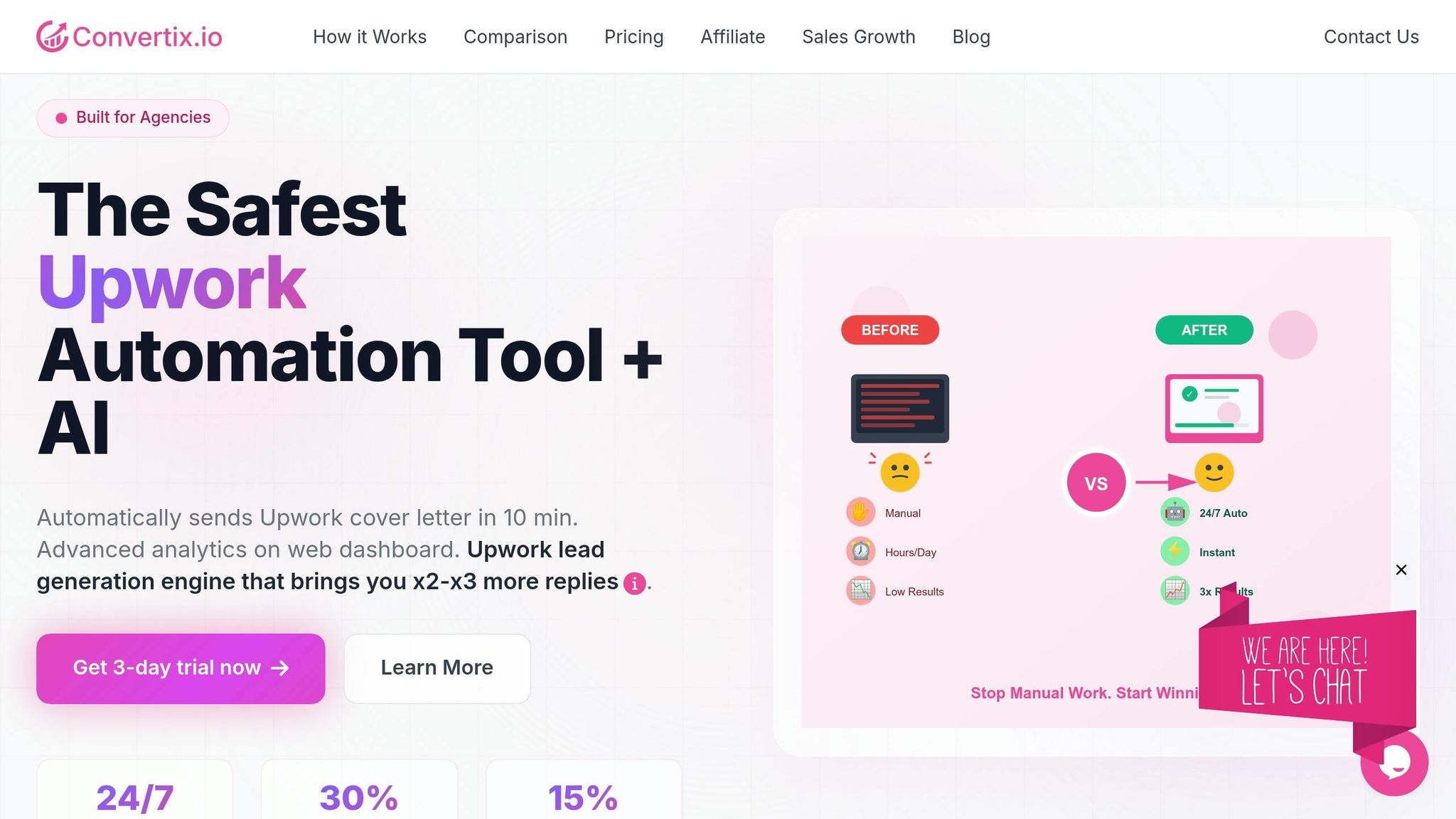
Convertix.io is designed to help agencies streamline their Upwork bidding process. Tailored for agencies with up to 50 employees, it eliminates the need for manual lead generation staff by operating 24/7. The platform can submit proposals within 10 minutes of a job being posted, making it an efficient solution for scaling Upwork efforts.
Automation Capabilities
Convertix.io uses a smart, two-stage filtering system to ensure proposals are submitted only for relevant jobs. The first stage applies Upwork’s standard filters, like keywords, category, and budget. The second stage uses AI-powered job validation to mimic human decision-making. For jobs with custom questions, the platform either generates an AI-based response or sends an instant notification via Slack or Telegram for manual input. To minimize suspension risks, its proprietary technology simulates real browser behavior.
Proposal Optimization Features
The platform takes your portfolio and crafts personalized cover letters, selecting the most relevant projects to highlight. It explains to potential clients why these examples align with their needs. For instance, a QA & Testing agency based in Ukraine earned over $500K on Upwork and saw impressive results after using Convertix.io. Within 21 days, they achieved a 70% view rate and a 40% reply rate, leading them to switch from the trial version to a full subscription.
“Convertix reduced our proposal workflow from 15 hours to about 3–5 hours per week and made scaling our Upwork outreach much easier.”
– Zoha, Co-Founder, Skip The Noise Media
Scalability
Convertix.io’s web dashboard provides detailed performance metrics, including view rates, reply rates, and hire rates, broken down by job stream or cover letter template. Most users report view rates of 25–30% and reply rates between 5–15%. Onboarding is quick and efficient, taking just 1–3 days compared to the weeks it might take to onboard human proposal managers. This efficiency also translates into cost savings, with pricing structured to suit different needs.
Pricing
Convertix.io offers a 14-day free trial and three subscription options:
- Starter: $299/month for 300 proposals
- Advanced: $599/month for 600 proposals
- Bespoke: Custom pricing for unlimited proposals.
sbb-itb-5c5517e
2. Tool A
Tool A takes a streamlined approach to agency bidding by focusing on speed and personalization, making it easier to handle job opportunities efficiently.
AI Job Qualifier
One of Tool A’s standout features is its AI Job Qualifier. This tool evaluates new job postings based on your specific criteria – such as budget, required skills, and client quality – before you spend any connects. This means you’ll only bid on jobs that align closely with your agency’s expertise, saving time and resources.
Automation Capabilities
Tool A operates around the clock, identifying matching jobs and submitting bids with smart scheduling that considers time zones. By targeting periods with lower competition, it increases the likelihood of your bids standing out. Additionally, it uses strategic delays that mimic human behavior, helping to avoid detection by Upwork’s automated systems.
Proposal Optimization Features
The “Sardor AI” feature takes proposal writing to the next level. It analyzes job postings alongside your qualifications to craft highly specific and targeted cover letters. These proposals are delivered quickly, ensuring your agency is among the first to respond. Another handy feature, the “Proposal Studio”, offers customized opener suggestions based on niche markets and integrates seamlessly with performance analytics.
Scalability
Tool A is built to handle growth, enabling agencies to scale their proposal volume from 150 to over 500 per month without needing additional staff. Even solo freelancers can benefit by using agency profiles to maximize their reach.
Pricing
Instead of a flat subscription fee, Tool A uses a proposal-based pricing model. This approach ties costs directly to your bidding volume and includes all features available in the “Agency Plan”. This pricing structure makes Tool A an appealing choice for agencies looking to scale their operations effectively.
3. Tool B
Tool B provides a specialized bidding system designed to streamline job filtering and speed up responses.
Automation Capabilities
This platform stands out by combining continuous job-feed monitoring with a powerful AI scoring system. The AI Job Qualifier analyzes the full context of job postings, moving beyond basic keyword matching. It assigns a score – up to 100% – based on your agency’s preset rules. For instance, a job might score a 94% match against your preferences. This scoring system ensures that proposals are sent out quickly and are tailored to the job’s specifics. The high level of automation also supports more effective proposal customization. This is a critical step in learning how to write a winning Upwork proposal.
Proposal Optimization Features
Tool B includes a personalized AI playbook that reflects your agency’s tone and style, ensuring every proposal feels consistent and tailored. The AI Job Assistant helps by filtering out jobs with a low chance of success, saving you credits and Connects. Over time, this feature improves cost efficiency by focusing only on high-potential opportunities.
Scalability
The platform’s smart filters work in tandem with the AI qualifier, allowing you to manage a growing number of proposals without adding to your workload. This makes Tool B an excellent choice for agencies aiming to scale their bidding activities while maintaining high-quality standards.
Pricing
Tool B offers a tiered subscription model based on the volume of AI requests and integration options. Freelancers can get started at an affordable entry-level price, while agencies can access more advanced CRM integrations at higher tiers. This pricing structure lets you adjust your investment as your bidding needs evolve.
Strengths and Weaknesses
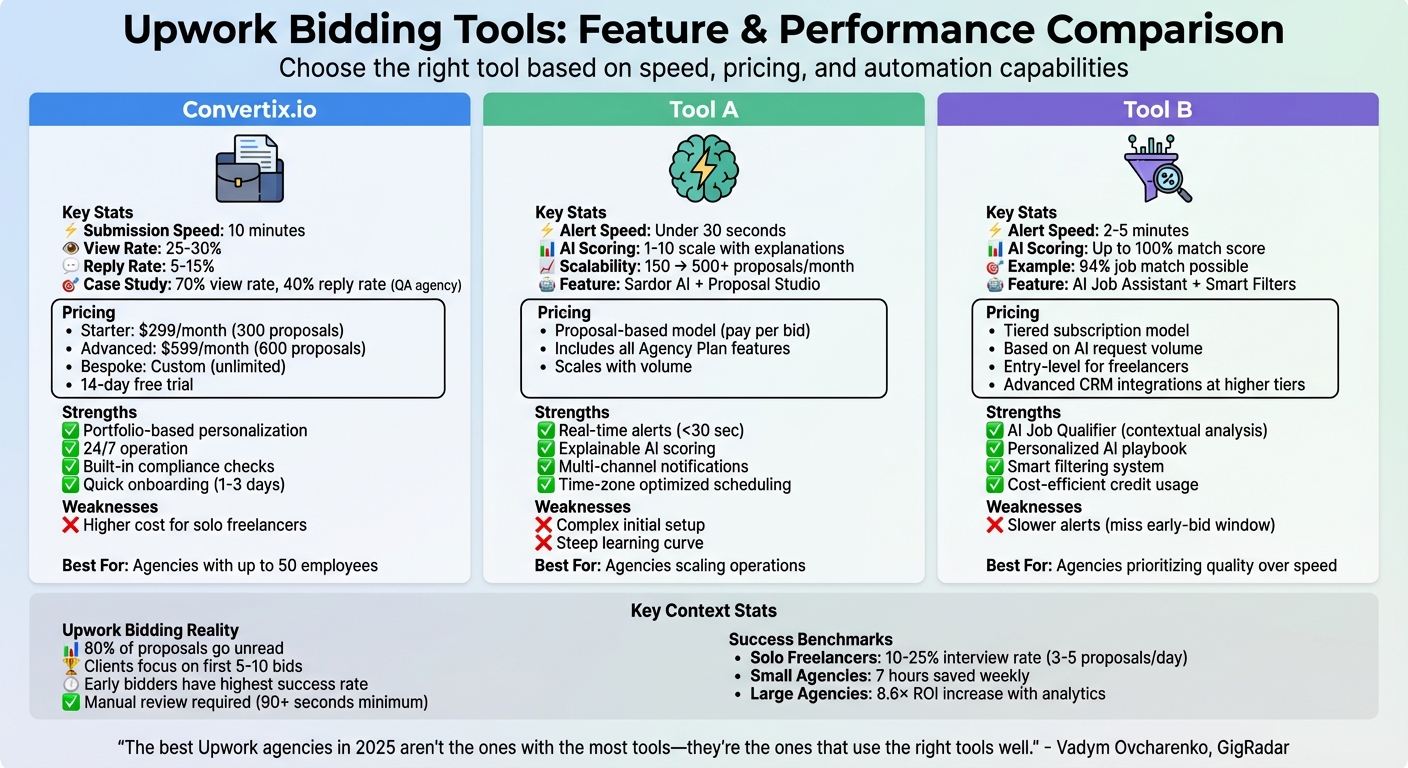
Upwork Bidding Tools Comparison: Features, Pricing, and Performance Metrics
When it comes to optimizing your bidding strategy on Upwork, the tools we reviewed tackle three main challenges: speed, proposal quality, and compliance. The table below gives a clear breakdown of each tool’s standout features and areas where they might fall short.
| Tool | Key Strengths | Key Weaknesses |
|---|---|---|
| Convertix.io | AI tailored for portfolios, creating highly personalized proposals with strong conversion rates; operates around the clock with built-in compliance checks. | Higher subscription cost ($299/month), which might deter solo freelancers. |
| Tool A | Provides real-time alerts in under 30 seconds; uses explainable AI scoring (1–10) to show why a job aligns with your profile; supports multi-channel notifications. | Requires a complex initial setup and rule configuration, which could overwhelm new users. |
| Tool B | Offers AI-powered job qualification to evaluate match quality; includes a personalized AI playbook for consistent agency-style tone; features smart filters to refine bids. | Alerts are slower, taking 2–5 minutes, which may cause you to miss the crucial early-bid window when clients are most engaged. |
While fast notifications are essential, they only work if paired with well-crafted proposals that catch a client’s attention quickly. The best tools combine speed with AI that pulls specific, relevant examples from your portfolio to highlight your fit for the job. This level of AI personalization boosts ROI by turning more views into interviews. Keep in mind, Upwork prohibits fully automated proposals, so it’s critical to spend at least 90 seconds reviewing and customizing each AI-generated draft before submitting it.
“For a solo freelancer building a reputation, sending 5 exceptional proposals beats sending 50 mediocre ones. Use AI to write better, not just faster.” – OpenProposal
Conclusion
Choosing the right bidding strategy on Upwork begins with understanding your specific goals and resources. For solo freelancers with limited budgets, prioritizing quality over quantity is key. Tools like UpCat (free) or Upwex ($5/month), combined with a straightforward tracking system, can help you send 3–5 well-targeted proposals daily. With this approach, you might see interview rates ranging from 10% to 25%.
Small agencies, on the other hand, often struggle with Upwork proposals but thrive on teamwork and coordination. Using a centralized alert system, shared snippet libraries, and tools like Airtable or Notion can streamline operations and prevent redundant bids. These strategies typically cost around $40–50 per month, and users have reported saving an average of 7 hours weekly.
For mid-to-large agencies, automation paired with advanced analytics becomes a necessity. Integrating CRMs like Pipedrive or HubSpot allows you to track proposals from submission to contract. One AI automation agency reported an 8.6× increase in their Upwork ROI after adding an analytics layer to turn proposal data into actionable revenue insights. This underscores an important takeaway: speed only works when paired with precision.
Being among the first 5–10 bidders can be a game-changer since clients often review early proposals first. As Vadym Ovcharenko from GigRadar aptly puts it:
“The best Upwork agencies in 2025 aren’t the ones with the most tools – they’re the ones that use the right tools well”.
Ultimately, success on Upwork comes down to combining speed, customization, and compliance. Before fully committing to any new software, try piloting it for two weeks to evaluate its impact on your reply and shortlist rates.
FAQs
How can I bid fast without breaking Upwork rules?
To bid faster on Upwork while following the rules, stick to approved tools that boost your efficiency. Tools like AI-driven proposal generators and job alert systems can help you craft tailored proposals and respond more quickly to the right opportunities. However, steer clear of unauthorized auto-bidding scripts or bots – they go against Upwork’s Terms of Service and could jeopardize your account. Instead, focus on tools that simplify tasks like proposal writing, job filtering, and notifications to speed up your bidding process without breaking any rules.
What’s the best way to personalize proposals at scale?
To efficiently personalize proposals on a larger scale, start by building a well-organized proposal library. This library should include reusable snippets and templates that make customization fast and easy. Aim to keep each proposal short and focused – around 150–220 words – while tailoring it specifically to the client. Mention their name, project details, and goals to make the proposal feel relevant and thoughtful.
AI tools can be a helpful aid in speeding up the personalization process, but don’t rely on them entirely. Adding a human element is key to maintaining trust and authenticity. This strategy not only saves time but also increases engagement with your proposals.
Which metrics should I track to improve my Upwork win rate?
To improve your chances of success on Upwork, keep an eye on key metrics like your response rate, interview rate, and win rate. These numbers reveal how often your proposals turn into interviews and contracts. Beyond that, track other important KPIs such as:
- Revenue per proposal: How much income each proposal generates on average.
- Response time: How quickly you reply to potential clients.
- Proposal scoring: The quality and relevance of your proposals.
- Engagement metrics: This includes how often your proposals are viewed and the number of replies you receive.
Regularly reviewing and analyzing these data points allows you to fine-tune your approach, helping you secure more projects and grow your success on the platform.
