
Want to win more clients on Upwork? Start by tracking your proposal conversion rates.
Your proposal conversion rate is the percentage of proposals that lead to client actions – like responses, interviews, or contracts. By analyzing these metrics, you can identify what works, refine your proposals, and improve your success rate without wasting time or resources.
Here’s what you need to know:
- Key Metrics: Track response rates (client replies), interview rates (proposals leading to calls), and win rates (proposals resulting in contracts).
- Formulas:
- Response Rate = (Client Responses ÷ Proposals Sent) × 100
- Interview Rate = (Interviews ÷ Proposals Sent) × 100
- Win Rate = (Contracts ÷ Proposals Sent) × 100
- Why It Matters: Improving your conversion rate means landing more jobs with fewer proposals, saving time and Upwork connects.
Use tools like spreadsheets or automated platforms (e.g., Convertix.io) to track metrics and refine your strategy. The data will help you write better proposals, focus on the right projects, and grow your agency effectively.
Upwork – How I Get a 20% Response Rate on my Proposals (Freelancer Workshop by Matt Laker)
How to Calculate Proposal Conversion Rates
To understand how well your proposals are performing, it’s essential to track and calculate a few key metrics. The math is straightforward, and these metrics can provide valuable insights into your agency’s performance.
Key Metrics to Track
Focusing on three main metrics can give you a clear picture of your proposal success. Each one highlights different aspects of your process and helps pinpoint areas for improvement.
- Response Rate: This measures how often clients engage with your proposals in any way. Whether it’s a simple acknowledgment or a detailed follow-up, this metric shows how well your proposals grab initial attention. A low response rate might indicate why agencies struggle with Upwork proposals, such as issues with appeal, timing, or targeting.
- Interview Rate: This tracks how many of your proposals lead to actual conversations or interviews with clients. If your response rate is decent but your interview rate is low, it suggests that while clients might be interested initially, your proposals may not be compelling enough to prompt further discussion.
- Win Rate: This is the ultimate measure of success – the percentage of proposals that result in signed contracts. A strong win rate means your proposals align well with what clients are looking for and that you’re effectively closing deals.
By analyzing the relationship between these metrics, you can better diagnose performance issues. For example, if you have a 15% response rate but only a 3% interview rate, the challenge lies in converting initial interest into meaningful conversations rather than attracting attention.
Step-by-Step Calculation Methods
These formulas are simple but powerful tools for measuring your performance. Each one provides a percentage that you can track over time.
- Response Rate:
(Number of client responses ÷ Total proposals sent) × 100
Example: If you sent 50 proposals and received 12 responses, your response rate would be (12 ÷ 50) × 100 = 24%. This means 1 in 4 proposals caught a client’s attention. - Interview Rate:
(Number of interviews or calls ÷ Total proposals sent) × 100
Example: If 6 of those 50 proposals led to interviews, your interview rate would be (6 ÷ 50) × 100 = 12%. This shows that only half of your initial responses turned into interviews. - Win Rate:
(Number of contracts awarded ÷ Total proposals sent) × 100
Example: If 3 of your 50 proposals resulted in signed contracts, your win rate would be (3 ÷ 50) × 100 = 6%. While this might seem low, it’s a common figure for many agencies on platforms like Upwork.
You can also calculate conversion rates between stages to uncover bottlenecks. For instance, if 3 out of 6 interviews resulted in contracts, your interview-to-win conversion rate would be (3 ÷ 6) × 100 = 50%. This indicates strong performance once you’re in the interview stage. To maintain this momentum, you should also focus on how to write winning proposals that consistently close the gap between an interview and a contract.
Consistency is key when calculating these metrics. Always use the same time periods and counting methods to ensure reliable comparisons.
Setting Up a Tracking System
To turn raw numbers into actionable insights, you need a reliable tracking system. The best systems are both simple and consistent.
- Spreadsheets: For agencies just starting out, a basic spreadsheet can work wonders. Record key data points and use formulas to calculate metrics. Over time, this will help you spot trends.
- Dashboards: As your proposal volume grows, tools like Google Sheets or Excel can automate calculations and generate visual charts. Set up formulas to calculate conversion rates automatically, saving you time and effort.
- Convertix.io: Platforms like Convertix.io take automation a step further by tracking submissions, responses, and metrics for you. This eliminates manual data entry and ensures accuracy, allowing you to focus on improving your proposals.
To get even more value from your tracking system, consider logging additional details like proposal timing, project budgets, client history, or seasonal trends. These extra data points can reveal patterns that simple percentages might miss.
Start with a straightforward system and add complexity only when it provides clear benefits. The goal is to make tracking a seamless part of your workflow, not a burden. With these metrics in hand, you’ll have the insights needed to refine your proposals and improve your success rates over time.
Tools to Track Conversion Rates
Once you’ve identified your key conversion metrics, the next step is selecting the right tools to track them. With the right tools, you can turn raw data into actionable insights – without breaking the bank.
Upwork’s Built-in Analytics
Upwork offers basic analytics to help you understand how your proposals are performing. On your dashboard, you can find data on proposal submissions, profile views, and essential metrics like proposal view rates and hire rates over specific time periods. It also highlights your Job Success Score, which reflects client satisfaction and contract completion rates. While these tools provide a solid starting point, they fall short when it comes to deeper segmentation, such as breaking down performance by template, project, or team member. For more detailed insights, automated tracking tools can fill the gap.
Using Convertix.io for Automated Tracking
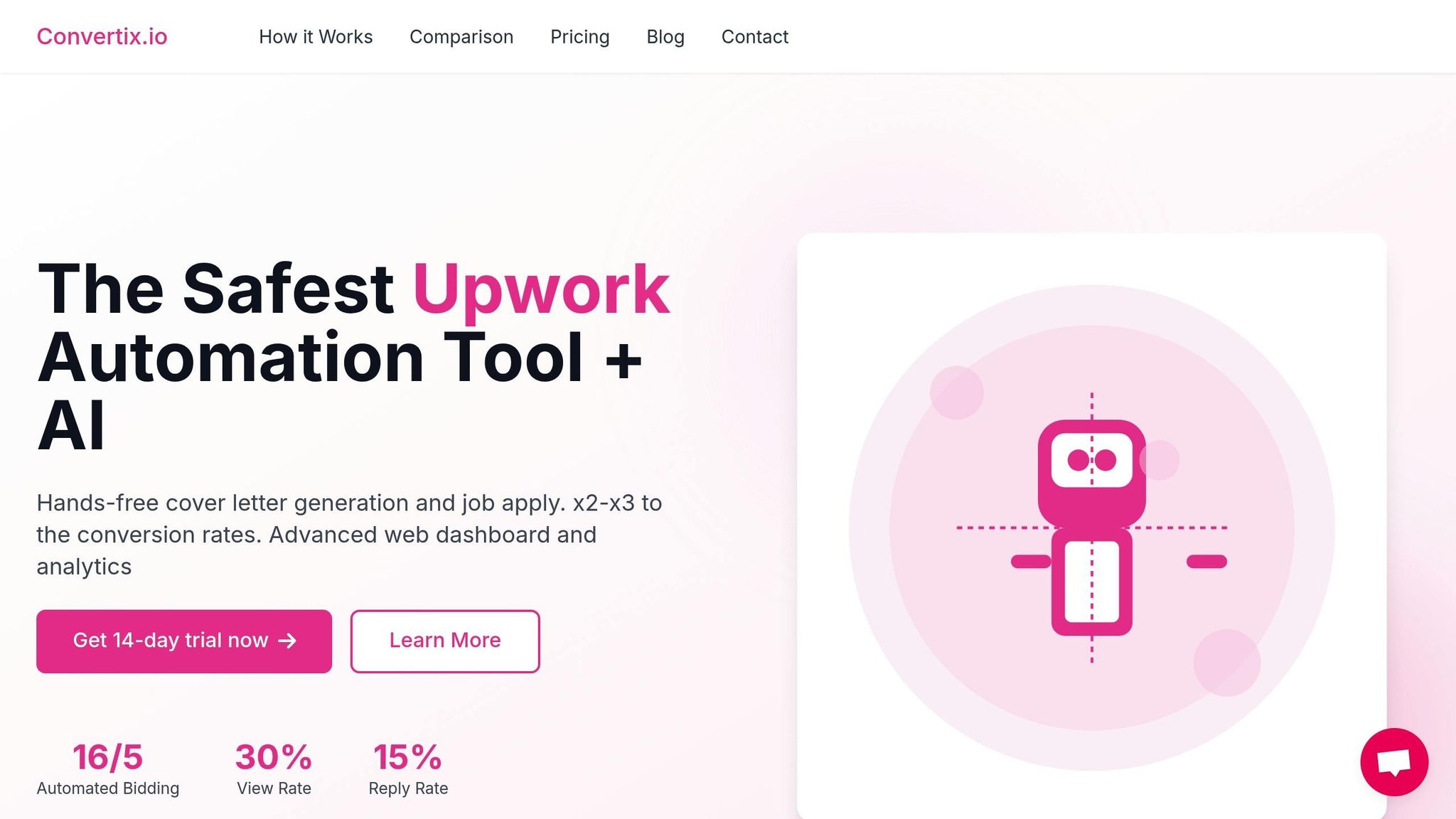
For agencies looking to scale their Upwork operations, automated tracking tools like Convertix.io can be a game-changer. This platform goes far beyond Upwork’s basic analytics by offering detailed performance tracking. It monitors metrics like view rates, reply rates, and hire rates for each job stream, cover letter template, and business manager. By aligning job qualification and cover letter creation with your agency’s portfolio, Convertix.io helps avoid irrelevant applications and saves valuable Upwork connects. Agencies using this tool often see proposal view rates between 25–30% and reply rates ranging from 5–15%. With 24/7 operation and AI responses delivered in 5–10 minutes, Convertix.io frequently generates client responses within the first week of implementation.
Tracking Metrics Over Time
Tracking your metrics consistently – on both a weekly and monthly basis – can uncover patterns that might otherwise go unnoticed. This helps refine your proposal strategies over time.
- Weekly Tracking: Weekly reviews are great for identifying immediate issues or testing new strategies. For example, if response rates suddenly drop, you can quickly investigate whether the cause is related to changes in your proposals, shifts in market demand, or even algorithm updates on the platform. Weekly tracking can also highlight seasonal trends, such as lower activity during holidays or fluctuations at the end of a quarter.
- Monthly Tracking: Monthly data provides a broader view, smoothing out short-term variations to reveal long-term trends. This is especially helpful when assessing the impact of major strategy changes, onboarding new team members, or shifting focus to new markets. To maintain accuracy, always use consistent date ranges, methods, and definitions when analyzing your data.
Visualizing your data can make it easier to spot trends. Whether you use spreadsheets with formulas or a tool like Convertix.io, dashboards that update automatically can provide a clear picture of your performance. Charts breaking down conversion rates by category often reveal insights that raw numbers alone can’t. Regular tracking not only helps you benchmark your progress but also sets the stage for setting realistic, data-driven goals. By combining these tracking practices with your earlier conversion calculations, you can ensure that every metric leads to meaningful action.
sbb-itb-5c5517e
How to Analyze Conversion Data
Tracking metrics is just the starting point. The real value lies in analyzing that data to uncover patterns and actionable insights that can improve your results.
Breaking Down Data by Category
To make sense of your conversion data, start by organizing it into meaningful categories. This helps you identify what’s working and where there’s room for improvement. For instance, you could segment your data by industry, client type, or submission timing.
Take proposals as an example. Breaking them down by industry might show that one niche consistently outperforms another. Similarly, analyzing client types – such as startups versus established businesses or new clients versus repeat ones – may reveal differences in responsiveness or conversion rates.
Timing also plays a big role. Research shows that response rates drop significantly after 60–90 minutes or when competitor bids exceed 10. To better understand this, categorize your submissions into time-based groups like "within 1 hour", "1–6 hours", and "6+ hours." This can help you quantify the advantages of acting quickly.
If your team has multiple proposal writers, track conversion rates by author. This can highlight individual strengths and provide opportunities for sharing effective strategies across the team. These segmented insights can serve as a foundation for identifying what drives successful proposals.
Spotting Patterns and Trends
Once your data is categorized, look for recurring themes in your most successful submissions. These patterns can help you refine your approach and consistently create proposals that engage clients.
Start by examining the structure of your top-performing proposals. Clients spend an average of just 15 seconds per proposal, so those opening lines are critical. Identify common elements – like clear answers to key questions right at the start – and test these strategies across different projects.
The tone and language of your proposals can also provide valuable insights. Some clients may prefer a technical, detail-oriented approach, while others respond better to a more conversational tone. Pay attention to the words and phrases that appear in your most successful proposals and think about how to replicate that style.
Timing trends are another area worth exploring. Beyond just submission speed, consider whether certain days of the week or times of the month yield higher response rates. Tracking these patterns over time can help you fine-tune your submission schedule for better engagement.
Finally, look at how project value correlates with conversion rates. You might find that proposals for projects within a specific price range perform better. These insights can guide you in targeting the right opportunities and allocating your efforts more effectively.
Consistency in how you track and compare data is essential. Use the same criteria and timeframes for analysis, and factor in external influences like market shifts, seasonal trends, or platform updates. Keep in mind that correlation doesn’t always mean causation – if you notice a trend, test it to confirm whether it’s a reliable pattern. By integrating these insights into your strategy, you can continuously improve your approach to proposals and conversions.
How to Improve Proposal Conversion Rates
Once you’ve analyzed your data, the next step is to put those insights to work. This means fine-tuning your proposals through better writing, structured testing, and regular updates to stay ahead.
Writing Better Proposals
Armed with your data, the first priority is to sharpen the content of your proposals. Start by grabbing the client’s attention and showing immediate value. Address their main challenge right away, as outlined in their job listing. Skip the generic introductions about your agency and dive straight into how you can solve their specific problem. For example, if a client mentions struggles with e-commerce conversions, open with your tailored strategy to tackle that issue.
Make every proposal feel personal. Reference specific details from the job description, use industry-relevant terms, and include touches like mentioning the client’s company name. When you add portfolio samples, ensure they’re directly tied to the type of work the client needs. Be proactive about addressing concerns – talk about how you handle tight deadlines or ensure transparent pricing. These details can build trust and set you apart.
A/B Testing Proposals
Experimenting with different proposal formats is another way to boost conversion rates. Use A/B testing to compare how different approaches perform on similar job postings. Change only one element at a time – like the opening line or overall tone – to see what makes the biggest impact.
For instance, test whether starting with a question or showcasing a past success resonates more with clients. Some clients might appreciate detailed, technical explanations, while others may prefer a straightforward, results-driven approach. To get accurate results, keep variables like submission timing and project type consistent during your tests.
Use the insights from these tests to refine your proposals further, ensuring your approach evolves with client preferences.
Regular Monitoring and Adjustments
Keeping an eye on your performance is crucial. Shifts in market trends, platform updates, and changing client expectations mean your strategies need to evolve constantly. Regularly review your proposal metrics and tweak your approach as needed.
Automation tools can make this process easier. Platforms like Convertix.io can automatically track how your proposals are performing, saving you from manual data collection. These tools analyze historical data to refine your proposals over time, creating a cycle of continuous improvement and better results.
Conclusion: Using Data to Drive Growth
Tracking proposal conversion rates lays the groundwork for winning more projects and expanding your agency. The data you gather serves as a guide for making smarter decisions about where to channel your energy and how to fine-tune your proposals.
By focusing on key metrics, you gain a clear understanding of your current performance and can identify areas that need improvement. Over time, consistent tracking uncovers patterns – showing which types of projects, clients, and proposal styles yield the best outcomes for your agency.
This approach transforms proposal writing into a strategic process. Instead of guessing why certain proposals fall flat, you can pinpoint specific issues. For instance, you might notice that while web development proposals have high conversion rates, marketing campaign proposals lag behind. Or perhaps there’s a noticeable drop in interview rates during specific months.
Successful agencies treat proposal conversion as a continuous journey. They monitor performance, experiment with new strategies, and adjust their approach based on the insights their data provides. This creates a competitive edge that builds over time – each proposal becomes sharper and more effective. Eventually, this refinement often leads to embracing Upwork automation tools to maintain growth.
For agencies aiming to scale their presence on platforms like Upwork, Convertix.io simplifies this process. Instead of juggling spreadsheets to track metrics, the platform automates performance monitoring and uses that data to enhance future proposals. This allows you to focus on what truly matters – delivering exceptional work.
In short: agencies that consistently measure their conversion rates outperform those that don’t. Combining accurate tracking with regular adjustments creates a system that secures more interviews, wins more projects, and drives steady growth for your business.
FAQs
How can I determine which part of my proposal process needs improvement based on conversion rates?
To improve your proposal process, begin by evaluating key metrics like response rates, open rates, and engagement levels. For example, if response rates are low, it might mean your proposals lack relevance or fail to meet quality expectations. Similarly, if prospects lose interest after the initial contact, it could signal that your profile or outreach strategy needs fine-tuning.
Break your process into distinct stages – such as job selection, proposal writing, and follow-up – to identify where prospects are dropping off. By focusing on one stage at a time, you can make targeted adjustments to boost conversion rates and refine your overall approach. Leveraging data-driven insights ensures that the changes you implement are meaningful and effective.
What are the best ways to write proposals on Upwork that convert into jobs?
To craft proposals on Upwork that grab attention and lead to jobs, start by making them personal. Use the client’s name and mention specific points from their job description to demonstrate genuine interest. Highlight how your skills and experience align with their needs, backing it up with relevant examples and measurable results from your past work.
Keep it short and simple – aim for 150-250 words. Clients often skim through proposals, so stick to short paragraphs and avoid unnecessary fluff. Maintain a tone that’s both professional and approachable, and don’t forget to include a clear call to action, like inviting the client to discuss the project in more detail.
How can Convertix.io help agencies track and improve their proposal conversion rates on Upwork?
Convertix.io empowers agencies to improve their proposal conversion rates by automating essential tasks like lead generation, job matching, and proposal creation. With the help of AI, it crafts personalized and highly relevant proposals, allowing agencies to respond to opportunities more quickly and accurately.
On top of that, Convertix.io offers in-depth analytics and performance metrics, giving agencies the tools to monitor their conversion rates and pinpoint areas that need attention. This data-driven system not only simplifies workflows but also encourages ongoing improvement, helping agencies boost their success rates and grow their presence on Upwork efficiently.
