
AI is changing how small and medium-sized agencies operate, helping them grow without expanding their teams. By automating repetitive tasks like job matching, proposal creation, and performance tracking, AI allows teams to focus on higher-value work like strategy and client relationships. Agencies are also shifting from traditional department-based structures to portfolio-centric setups, grouping teams by skills and client needs for better efficiency.
Key takeaways:
- AI automates routine tasks: Frees up time for more impactful work.
- Portfolio-centric teams: Focused on specific skills and client portfolios.
- Improved decision-making: AI analytics provide actionable insights.
- Cost-effective growth: AI reduces the need for additional staff.
Platforms like Convertix.io demonstrate how agencies can scale faster with AI tools, offering automated proposals and job matching for $299/month, saving both time and resources. However, successful AI integration requires clear workflows, training for team members, and ongoing performance monitoring.
Structuring Engineering Teams to Lead and Scale your AI Journey
Research Findings: How AI Changes Team Dynamics
Studies show that incorporating AI into workplace processes is transforming how teams collaborate and operate. As routine tasks become automated, teams are shifting their focus toward more strategic and creative priorities. These changes are paving the way for significant shifts in how teams function and interact.
Transitioning to AI-Supported Teams
Organizations are moving away from rigid, hierarchical setups toward more adaptable team structures. By automating repetitive tasks – like job matching or AI vs manual proposal writing – employees can redirect their energy toward problem-solving and strategic initiatives. This shift is fostering a more flexible work environment where teams are organized around specific projects and client needs rather than traditional departmental boundaries. This project-driven approach aligns team efforts more closely with client outcomes, enhancing overall effectiveness.
Boosting Productivity and Efficiency
Companies leveraging AI tools report noticeable improvements in productivity. Automating time-consuming processes allows teams to allocate their time and resources more strategically. With mundane tasks handled by AI, employees can focus on customized solutions, detailed planning, and nurturing client relationships. Moreover, AI-powered analytics provide real-time insights, helping teams refine their strategies and streamline workflows across various projects.
The Impact of AI on Team Relationships
AI’s influence extends beyond operational tasks, reshaping how team members interact. With routine responsibilities automated, employees have more time for meaningful discussions and collaborative problem-solving. This shift encourages deeper strategic planning and creative brainstorming. However, integrating AI also requires thoughtful change management to ensure team members understand their evolving roles and feel supported during the transition.
While the effects of AI vary across organizations, one thing is clear: it’s fostering workplaces that are more flexible, efficient, and focused on strategic collaboration. These changes highlight AI’s growing role in creating agile, forward-thinking teams.
How AI Tools Change Key Team Functions
AI tools are reshaping how teams work, not just by automating tasks but by transforming workflows and collaboration. This shift introduces new ways for teams to allocate resources, streamline operations, and achieve better outcomes. Below, we’ll explore how AI impacts key functions like job matching, proposal creation, and performance tracking.
Automated Job Matching and Assignment
Matching the right person to the right project has traditionally been a manual and often inconsistent process.
AI-powered job matching changes this by analyzing project requirements and team capabilities in real time. It ensures that each opportunity is paired with the most suitable team member, focusing efforts on projects with the highest potential for success.
Take Convertix.io, for example. This platform continuously scans Upwork for opportunities and filters them based on customizable portfolio strengths. The result? Teams save time and can focus more on strategic activities like building client relationships and planning projects.
This automation also impacts team structure. Instead of hiring staff solely to identify opportunities, agencies can redirect those resources toward client engagement and project delivery. The result is a flatter organizational model where more team members contribute directly to revenue-generating tasks, shifting their focus from routine tasks to strategic initiatives.
Portfolio-Based Proposal Creation
Writing proposals has always been a time-consuming process. Teams often struggle to balance personalization with consistency, making it a challenging and resource-intensive task.
AI tools simplify this by tapping into an agency’s portfolio data to craft highly targeted proposals. These tools analyze past projects to highlight the most relevant examples, ensuring each proposal effectively showcases the agency’s strengths.
Convertix.io is a great example of this shift. It automatically integrates relevant project examples into proposals, often producing submissions that are more tailored and effective than those written manually. This approach not only saves time but also increases the chances of winning projects.
With AI handling the heavy lifting, team roles evolve. Instead of writing proposals from scratch, team members focus on curating and refining portfolio content for the AI system. They act as portfolio strategists, ensuring project documentation is optimized for maximum impact. This shift allows teams to spend less time on repetitive tasks and more time on strategic improvements.
Performance Analytics and Improvement
Traditional performance tracking often relies on basic metrics, which can lead to delayed insights and limited opportunities for improvement.
AI-powered analytics takes performance tracking to the next level. These systems monitor a wide range of metrics, from response times to client engagement, and uncover patterns that might otherwise go unnoticed. But the real advantage lies in their ability to offer actionable recommendations. For example, AI can suggest the ideal team composition for a project, pinpoint the best times to submit proposals, or identify skill gaps that need attention.
This data-driven approach transforms decision-making. Instead of relying on intuition or hierarchical input, teams can make adjustments based on clear, objective evidence. The integration of AI analytics also encourages the development of specialized roles focused on performance optimization, ensuring that insights lead to tangible improvements. With real-time data at their fingertips, teams can continuously refine their strategies, aligning perfectly with the broader narrative of scalable growth powered by AI.
Case Study: AI-Powered Efficiency with Convertix.io
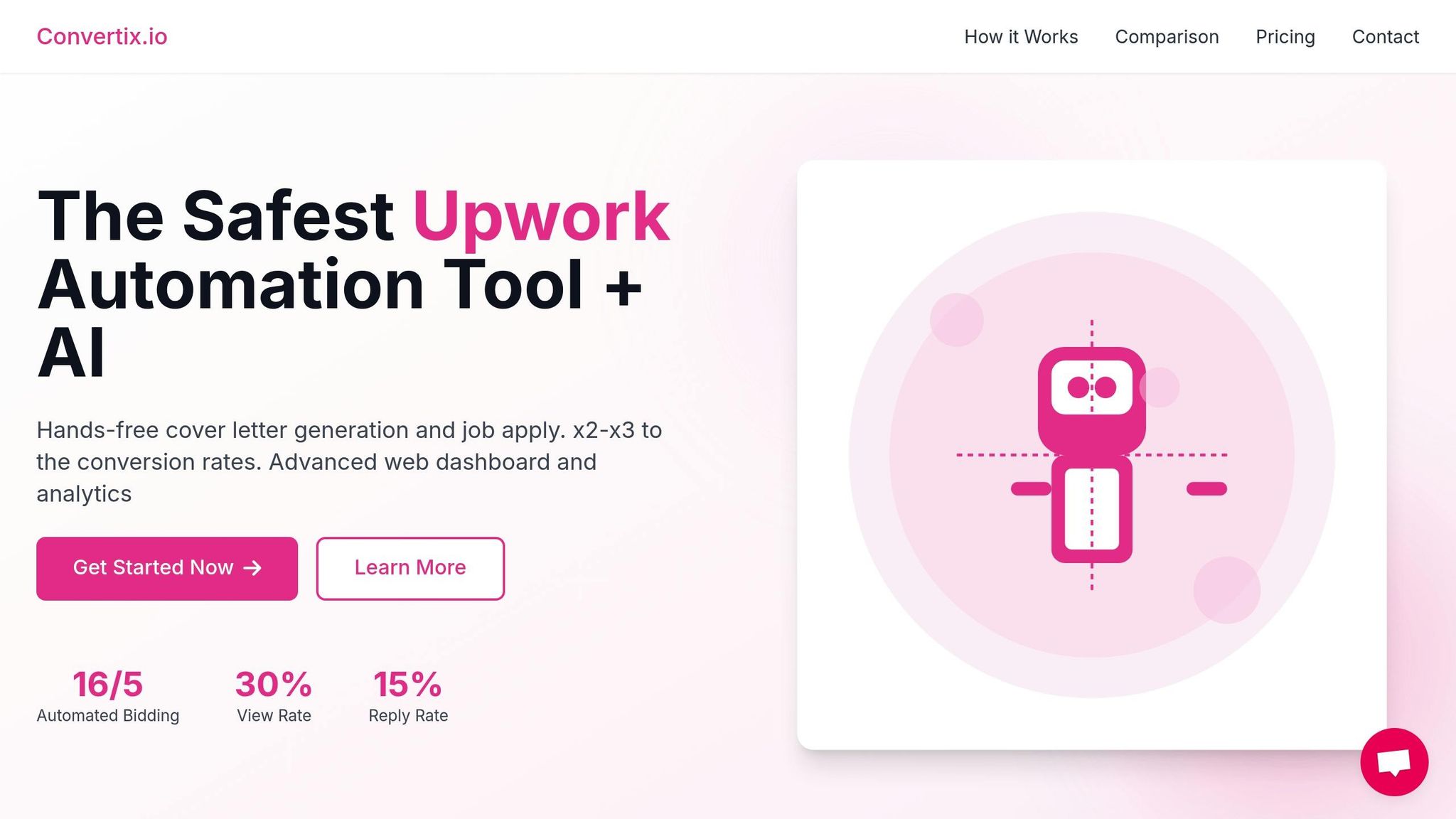
Let’s dive into how Convertix.io is reshaping operations for Upwork agencies. By automating two of the most time-consuming tasks – job matching and proposal creation – this platform boosts team productivity and fuels scalable growth. This case study highlights the tangible changes Convertix.io brings to agency workflows.
Automating Proposal Creation and Job Matching
Convertix.io takes on the tedious work of finding relevant jobs and crafting tailored proposals. By leveraging AI, it uses portfolio data and predefined preferences to identify promising opportunities. What used to take 1–2 hours manually is now streamlined into a quick 5–10 minute process. Even better, the system operates 16 hours a day, 5 days a week, ensuring continuous proposal submissions. Each proposal is customized to include key portfolio elements, giving agencies a competitive edge in their outreach.
Shifting Team Roles Toward Strategy
With routine tasks handled by AI, agency teams can redirect their focus to higher-level, strategic activities. Instead of spending hours on manual lead generation, teams now configure job preferences and refine portfolios to optimize results. This shift has led to the emergence of specialized roles like “portfolio strategists”, who concentrate on enhancing project documentation to maximize the system’s effectiveness. The 16/5 operational model ensures that while the AI works on lead generation during off-hours, teams can focus on strategic planning during business hours.
Results That Speak for Themselves
The results are hard to ignore. Convertix.io reports a proposal view rate of 25–30% and a reply rate of 5–15% – a significant improvement over the typical manual reply rate of 5–7%. At $299 per month, agencies get 300 automated proposals, advanced portfolio matching, and priority support. Compared to the $400–$800 monthly cost of dedicated lead generation staff (plus fees), this represents a clear cost advantage. Many agencies see client responses within the first week of using the platform, and users also save up to 30% on Upwork connects, further boosting profitability. These efficiency gains allow teams to focus on higher-value activities while maintaining a steady stream of high-quality proposals, driving both growth and operational success.
sbb-itb-5c5517e
Benefits and Challenges of AI Integration
AI integration brings a mix of opportunities and obstacles that agencies must navigate to maintain growth and efficiency.
Benefits of AI in Team Management
AI streamlines routine tasks, boosting team productivity and allowing employees to focus on strategic priorities.
One of the standout advantages is scalability. For many, the goal is to scale your agency on Upwork fast by leveraging these efficiencies. AI enables teams to take on more work without requiring additional staff. By automating repetitive processes, AI not only operates around the clock but also frees up human resources for higher-level tasks that previously demanded significant effort.
Cost reduction is another major benefit. Compared to traditional methods, AI can lower expenses, particularly in areas like automated lead generation. This allows agencies to redirect resources toward essential activities, such as building stronger client relationships and refining strategic plans.
Here’s a quick comparison between traditional and AI-supported teams:
| Aspect | Traditional Teams | AI-Supported Teams |
|---|---|---|
| Task Focus | Manual handling of routine tasks | Emphasis on strategic planning and client engagement |
| Operating Hours | Limited to standard business hours | Continuous or extended operation |
| Scalability | Growth tied to hiring more staff | Significant growth potential with minimal staff increases |
| Cost Structure | Higher costs due to team expansion | Lower costs through automation |
| Response Time | Slower, manual processes | Faster, automated responses |
While the benefits are clear, adopting AI comes with its own set of challenges.
Challenges and How to Address Them
Integrating AI into team workflows isn’t without its hurdles. One common challenge is resistance from employees who may worry about job security or disruptions to their current routines. To ease these concerns, open communication is key. Clearly explaining how AI complements and enhances their roles can foster acceptance and collaboration.
Another challenge is the skill gap. Team members often need time and training to become comfortable with new technologies. Offering structured training programs that combine practical experience with ongoing support can make the transition smoother. Starting with a small group of “early adopters” who can champion the technology within the team is often an effective strategy.
Quality control is another concern when relying on AI-generated outputs. To address this, agencies should implement robust review processes that include human oversight to ensure the final product meets client expectations.
The complexity of integrating AI into existing workflows can also feel overwhelming. A phased approach, focusing first on a few key functions, allows teams to gradually adapt while gaining confidence in the new tools.
Finally, leadership must adapt to managing hybrid teams that combine human talent with AI capabilities. Managers should shift their focus from monitoring activities to measuring outcomes, which supports both human development and AI performance.
Successfully integrating AI requires flexibility, regular feedback, and a commitment to refining processes as new challenges arise. With the right approach, agencies can harness AI’s potential while maintaining a balanced and productive team dynamic.
Best Practices for Adding AI to Team Structures
Bringing AI automation tools into your team isn’t just about plugging in new software – it’s about carefully planning, training, and refining workflows to create a balance between automation and human expertise. Done right, this approach can streamline operations and position your team for scalable growth.
Redesigning Workflows for AI Integration
Start by documenting your current workflows for tasks like job searching, proposal writing, and client communication. This step helps you pinpoint which processes are time-intensive and could benefit most from automation.
For example, you might restructure workflows so that AI handles tasks like job matching or drafting initial proposals (as seen with tools like Convertix.io). Meanwhile, your team focuses on reviewing and customizing these drafts to maintain quality. This hybrid setup allows you to leverage AI for efficiency without sacrificing the human touch.
Another idea? Shift to a portfolio-first workflow. By standardizing client case studies, you give AI a solid foundation to draw from when crafting proposals. This ensures the automated output reflects your agency’s actual expertise and experience.
You’ll also need to redefine roles within your team. Instead of spending hours on repetitive tasks, business development specialists can focus on analyzing market trends or forming strategic partnerships. Similarly, project managers can dedicate more time to building relationships with clients rather than managing routine admin work.
To ensure quality, set up clear approval workflows. Define when AI-generated content can move forward automatically and when it needs human review. For instance, you might require human oversight for high-value projects or complex proposals, while simpler tasks can proceed without intervention.
Once workflows are optimized, it’s time to get your team on board with the changes.
Training Teams for AI Adoption
The key to successful AI adoption is helping your team see it as a tool to enhance their work, not replace it. Address concerns openly and provide real-world examples of how roles will evolve in this new setup.
Hands-on training is a must. Instead of theoretical sessions, let your team work directly with AI tools in real scenarios. For example, have your business development team practice using automated job-matching tools while learning how to interpret and act on the results. This practical approach not only builds confidence but also highlights areas for workflow improvement.
Identify “AI champions” within your team – those early adopters who are quick to embrace new technology. These individuals can mentor others, troubleshoot issues, and share tips as the tools become a regular part of daily operations.
Focus skill development on areas where humans excel. Train your team to strengthen their strategic thinking, client consultation, and creative problem-solving skills. These abilities become even more valuable as AI takes over routine, repetitive tasks.
Finally, establish feedback loops during training. Encourage team members to share their experiences and suggest improvements. This collaborative process not only refines the technology’s implementation but also makes the transition smoother for everyone involved.
Once your team is trained, keep an eye on performance to ensure the integration stays on track.
Monitoring and Adapting Over Time
AI integration isn’t a one-and-done project – it’s an ongoing process. Regular performance reviews are essential to ensure the tools continue to deliver value as your agency evolves. Track key metrics like proposal conversion rates, time saved, and overall team satisfaction to measure success objectively.
Hold weekly check-ins to discuss wins, challenges, and adjustments based on real-world data. What works on paper doesn’t always play out perfectly in practice, so be ready to adapt.
Compare AI-assisted workflows to traditional ones to identify where the tools are most effective. Metrics like proposal quality, client response rates, and time-to-completion can reveal patterns and help you fine-tune your approach.
Use this data to make iterative improvements. For instance, if AI-generated proposals excel in certain areas but falter in others, tweak your automation rules to play to its strengths. The goal is to keep refining rather than settling for a static setup.
Team feedback should remain a priority even after the initial training phase. Regular surveys or informal check-ins can uncover new challenges or opportunities for optimization.
As your team grows, be prepared to adjust. Processes that work for a small group may need tweaking as you expand to 15 or 25 team members. Build flexibility into your workflows from the beginning to accommodate these shifts.
Lastly, keep up with technology updates. AI platforms evolve quickly, and staying informed about new features can help you adapt your processes to take full advantage of advancements.
Conclusion: AI as a Driver for Scalable Growth
AI is reshaping how agency teams operate by shifting their focus from repetitive tasks – like job searching and drafting proposals – to more strategic, high-value activities. This shift allows agencies to adopt smarter, portfolio-focused approaches that enhance both efficiency and quality.
By using portfolio-centric methods, AI-driven proposals can maintain high standards while significantly increasing output. Tools like Convertix.io leverage an agency’s proven expertise to craft tailored proposals, ensuring automation not only saves time but also improves relevance and conversion rates.
Agencies that embrace AI integration are already seeing tangible results. From higher proposal conversion rates to faster service rollouts and improved client satisfaction, AI is proving to be a key ingredient in achieving sustainable growth.
But adopting AI isn’t just about plugging in new tools. Agencies that thrive in this evolving landscape are those that invest in their teams, redesign workflows thoughtfully, provide comprehensive training, and stay adaptable as technology and market demands continue to shift.
Looking ahead, AI will become the backbone of agencies aiming to scale effectively. The challenge lies in finding the right balance between AI’s efficiency and the human insight that drives creativity and connection.
For Upwork agencies, Convertix.io offers a clear example of how targeted AI solutions can tackle industry pain points. With plans starting at $299 per month for 300 automated proposals, it’s a practical option for agencies looking to streamline operations and boost growth.
Viewing AI as a strategic partner, rather than just a tool, positions agencies for the next wave of growth. By building scalable team structures, adapting quickly to market changes, and consistently delivering value to clients, agencies can harness AI to unlock new levels of success in the competitive Upwork landscape. AI isn’t just a tool for growth – it’s the foundation for the future.
FAQs
How does AI help agencies work more efficiently and boost productivity?
AI plays a key role in boosting efficiency and productivity in agencies by taking over repetitive tasks like scheduling, sending reminders, and analyzing data. By automating these time-consuming activities, team members can redirect their energy toward more strategic, high-impact projects that contribute to growth.
On top of that, AI-powered tools simplify workflows by enhancing decision-making and fostering smoother collaboration among teams. By managing routine operations with accuracy, AI not only saves time but also reduces errors, enabling agencies to accomplish more and scale effectively while using fewer resources.
What challenges do agencies face when adopting AI, and how can they address them?
Agencies face a range of obstacles when bringing AI into their workflows. Common issues include data silos, outdated infrastructure, and systems that simply don’t work well together. These technical roadblocks can make it harder to adopt AI smoothly and may limit how effective the tools can be. On top of that, resistance to change and gaps in team skills can further slow progress.
To address these challenges, agencies can start by prioritizing gradual system upgrades to modernize their infrastructure. Strong data management practices are essential to break down silos and improve compatibility. Additionally, investing in targeted training programs can help bridge skill gaps and prepare teams for AI integration. Fostering a workplace culture that welcomes innovation and new technologies can also make it easier for teams to adapt, paving the way for long-term success.
How does AI change team roles and responsibilities for growth?
AI is transforming how teams function by taking over repetitive tasks, which frees up team members to concentrate on strategic and creative efforts. This means more time for activities like decision-making, brainstorming innovative ideas, and building stronger client relationships. With AI handling the time-consuming processes, teams can streamline their operations and focus on work that delivers greater value.
At the same time, AI brings new responsibilities to the table. Tasks like managing AI tools, interpreting data insights, and ensuring seamless integration into daily workflows become part of the job. This shift often pushes team members to learn new skills, encouraging a workplace culture centered on growth and collaboration. By integrating AI effectively, teams can become more flexible, forward-thinking, and ready to scale their success.
